 Orcas Island Siding
 Decks on San Juan Island Take a Different Kind of Beating
A deck on San Juan Island lives a harder life than the same structure fifty miles inland. Marine air off the Salish Sea carries salt that settles into fastener heads and joint hardware. Rain here doesn't fall in short bursts and clear off — it drives sideways for days at a time, especially through the fall and winter, and it finds every seam a deck has. Add a moss and lichen season that can run from October through May in shaded, north-facing spots, and you've got a structure that's under near-constant moisture load for most of the year. We've repaired decks all over San Juan County, and the failure patterns on San Juan Island are consistent enough that we can usually tell you what we'll find before we pull the first board.
This page is specifically about deck repair — not full rebuilds, not new construction — for homes in the San Juan Island area. If your deck is sound overall but has soft spots, a failing rail, a slick surface, or fastener corrosion, this is what that job actually involves.
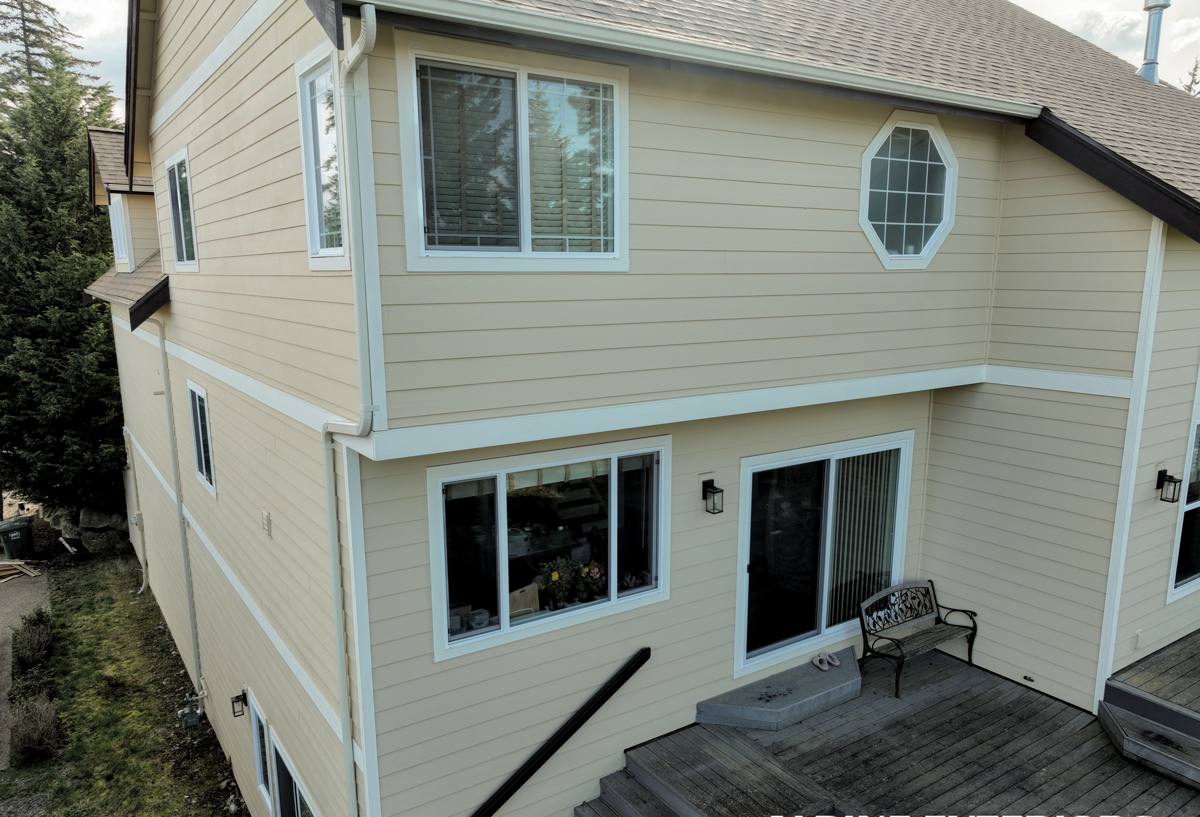
What Actually Fails First on Island Decks
Ledger boards and the house connection
The ledger board — where the deck attaches to the house — is the single most important structural connection on most decks, and it's also the one most likely to be hiding water damage. Flashing that was installed correctly ten or fifteen years ago can still fail as caulking shrinks and wood moves. On San Juan Island, driving rain pushes water sideways into this joint in a way that drier climates don't test. We check ledger flashing and the rim joist behind it on every repair call, even when that's not what the homeowner asked us to look at.
Fasteners and hardware
Salt air accelerates corrosion on anything less than fully rated stainless or hot-dip galvanized hardware. We regularly find joist hangers, structural screws, and post bases that are rusting from the inside of the connection out — visible corrosion on the surface is often the least of it. If your deck is more than 10-12 years old and was built with standard coated fasteners, hardware failure is one of the first things we check, even if the boards on top look fine.
Decking boards and moss
Wood decking that sits in shade — under trees, on the north side of a house, near dense landscaping — holds moisture longer and grows moss faster than open, sun-exposed decking just a few yards away. Moss isn't just a slip hazard; it holds water against the board surface and accelerates rot underneath. We see this constantly on shaded decks around the island, where two boards ten feet apart can be in completely different condition because one gets afternoon sun and the other doesn't.
Rail posts and guard rail connections
Rail posts take horizontal load every time someone leans on them, and that connection point is a common place for rot to develop unnoticed — often at the base, where the post meets the deck frame and water collects. A rail that feels the slightest bit loose or springy is a safety issue, not a cosmetic one, and it's one of the more common repairs we're called out for.
How We Diagnose a Deck Before We Touch It
Every repair starts with an actual inspection, not a guess based on what's visible from the top. We probe suspect boards and framing with an awl to find soft wood, check the ledger connection and flashing, look at every rail post base, and check fastener condition where we can get access. On a deck with visible problems in one area, we always check the rest of the structure — rot and corrosion rarely stay isolated, and a deck that's had one section fail from moisture usually has other areas heading the same direction, just earlier in the process.
We'll tell you plainly what's structural and needs to happen, what's optional and cosmetic, and what can reasonably wait. Not every soft board means the whole deck needs to come apart, and we're not going to tell you it does.
What a Correct Repair Involves
- Removing decking or rail sections only as far as needed to reach the actual damage — not more, not less
- Replacing any rotted framing (joists, rim joist, posts) with lumber rated for exterior/ground contact use as appropriate
- Re-flashing the ledger connection where the old flashing has failed, rather than caulking over it
- Upgrading fasteners and hardware to stainless or properly rated galvanized hardware suited to marine air exposure
- Matching replacement decking as closely as practical to existing material, or advising honestly when a full re-decking makes more sense than patching
- Re-securing and, where needed, reinforcing rail posts at their base connection to meet proper load-bearing standards
- Sealing or finishing repaired wood sections appropriately so new material doesn't weather at a visibly different rate
A repair that skips the flashing or reuses corroded hardware because it's faster is a repair that fails again in a few years. We don't do that kind of shortcut.
Signs your San Juan Island deck needs a look
- Boards that feel spongy, springy, or noticeably softer underfoot in specific spots
- A rail that moves or flexes when you lean on it
- Visible gaps, cracking, or dark staining where the deck meets the house
- Rust streaks below fastener heads or around joist hangers
- Persistent moss or algae in the same spots season after season
- Fasteners that are backing out or visibly corroded
- A musty smell coming from underneath the deck
Repair vs. Replace: What Actually Drives the Decision
| Factor | Leans toward repair | Leans toward replacement |
|---|---|---|
| Extent of rot | Isolated to one or two boards/joists | Widespread across the frame or multiple sections |
| Ledger/framing condition | Structural frame is sound, sheathing is intact | Rim joist or ledger area significantly compromised |
| Deck age | Under 15 years, single problem area | Original build 20+ years old with cumulative wear |
| Fastener condition | Mostly sound, isolated corrosion | Widespread hardware failure throughout structure |
| Decking material | Matching boards still available or close enough | Discontinued material, heavy mismatched patchwork likely |
Most of the deck calls we get on the island are genuinely repairable. Full replacement usually only makes sense when the framing itself — not just the decking surface — is compromised in multiple places, or when a homeowner wants to change the footprint or material anyway.
Why Local Experience on San Juan Island Matters
A crew unfamiliar with island conditions will often size a repair the way they would on the mainland — standard coated screws, standard flashing details, no real accounting for how much longer wood stays wet here after a storm. That approach tends to hold for a few years and then fail again, sometimes worse than the original problem, because it never addressed the salt-air corrosion or moisture retention driving the damage in the first place.
We work San Juan Island regularly enough to know which construction details actually hold up here versus which mainland-standard shortcuts don't. That means using the right fastener grade from the start, checking flashing details other crews skip, and knowing which spots on a given lot type — shaded, waterfront, exposed to prevailing wind — are going to need closer attention regardless of what the surface looks like today.
Getting a crew and materials to the island also matters logistically. We plan ferry schedules and material staging into the job so a repair doesn't stall out waiting on a part that should have been ordered ahead of time. That's part of knowing how to work here, not just knowing carpentry.
Maintenance That Extends the Life of a Repair
A correctly done repair still needs some upkeep in this climate to get its full lifespan. A few habits make a real difference on San Juan Island specifically:
- Clear moss and debris from shaded boards at least once during the wet season, not just in spring
- Keep gutters and downspouts clear so runoff isn't dumping extra water directly onto or under the deck
- Check rail post bases and any visible hardware for corrosion once a year
- Reapply sealant or finish on wood decking on the manufacturer's recommended cycle — salt air and UV both shorten it compared to inland conditions
- Keep landscaping trimmed back so air can move under and around the deck edges
What to Expect When You Call Us
We'll come out, do a real inspection rather than a five-minute look from the yard, and give you a straight assessment of what's actually wrong and what it'll take to fix it correctly. If it's a small, contained repair, we'll say so. If we find more than the original problem — which happens often enough on decks over 10 years old — we'll show you what we found before doing anything, not after.
If you've got a deck on San Juan Island that's showing soft spots, a loose rail, or hardware that's clearly seen better days, we're glad to take a look. Reach out for a free, no-pressure estimate using the form below.