 Orcas Island Siding
 Building Decks for Lopez Village Conditions
A deck in Lopez Village doesn't fail the way a deck fails inland. It fails at the fasteners first, then the framing connections, then the decking itself — usually in that order, and usually because it was built to a generic spec instead of a San Juan County one. Salt-laden air off the water, driving rain that comes in sideways during winter storms, and a moss season that can run eight months out of the year all work on a deck at once. None of that is exotic knowledge to anyone who has lived here a while, but it's surprising how many decks on the islands are still built like they're going up in a dry inland subdivision.
We build decks for homes in and around Lopez Village with those specific stressors in mind — not as an afterthought, but as the starting point for material choice, fastener selection, and framing detail.
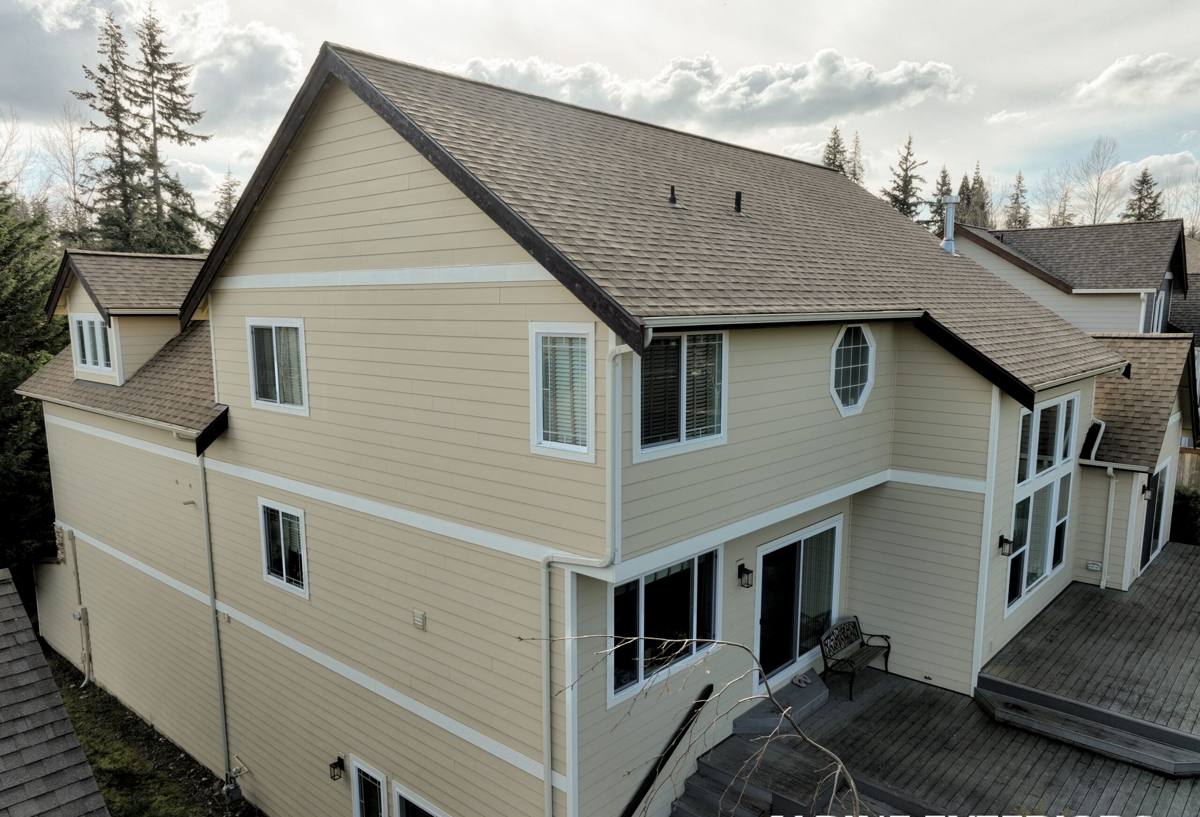
What the Local Climate Actually Does to a Deck
Salt Air and Metal Fatigue
Homes closer to the water take the brunt of this, but salt-influenced air travels further inland than most people expect, especially with the wind patterns common through the county. Standard coated deck screws and joist hardware corrode faster here than the manufacturer's published ratings would suggest for a "normal" climate. Once a fastener starts rusting, it loses holding strength long before it looks obviously bad from the surface.
Driving Rain and Water Intrusion
Winter storms here don't just rain down — they rain sideways. That matters for how ledger boards, flashing, and butt joints are detailed. A deck built for a climate with mostly vertical rainfall will let water track into places it shouldn't, particularly at the house connection point, which is the single most common spot we find rot on older island decks.
Moss, Algae, and Trapped Moisture
Long damp seasons plus tree cover common around Lopez Village create ideal conditions for moss and algae growth on horizontal surfaces. Beyond looking bad, moss holds moisture against the decking material far longer than open air would, which accelerates rot in wood and can degrade the surface layer of some composite products over time. Gap spacing, airflow underneath the deck, and surface texture all affect how much of a moss problem a given deck will have five years in.
What a Correct Deck Build Involves Here
A deck that's going to hold up in this environment isn't about buying the most expensive materials — it's about matching materials and details to the actual exposure the deck will see.
- Stainless steel or high-grade coated fasteners rated for coastal/marine exposure, not standard exterior-grade hardware
- Ledger board flashing detailed to shed water away from the house wall, not just seal it
- Joist hangers and structural connectors matched in corrosion resistance to the fasteners — mixing metals here causes galvanic corrosion
- Deck board spacing sized to allow drainage and airflow rather than a tight, "clean" gap that traps moisture and debris
- Framing kept clear of grade and vegetation where the site allows, to reduce the moss and mildew load on the underside
- Decking material chosen with the specific site's shade, tree cover, and rain exposure in mind — a sunny, open lot and a shaded, tree-lined lot in the same neighborhood can call for different choices
Decking Material Options for Lopez Village Homes
There's no single right answer for every property — it depends on how much sun the deck gets, how much upkeep the homeowner wants to do, and budget. Here's how the common options actually compare under local conditions.
| Material | Behavior in Salt Air / Rain | Moss Resistance | Maintenance |
|---|---|---|---|
| Pressure-treated wood | Good if fasteners and flashing are marine-grade; wood itself is treated for rot | Needs regular cleaning to stay ahead of moss buildup | Annual cleaning, periodic staining/sealing |
| Cedar | Naturally rot-resistant, but softer surface can hold moisture in shaded spots | Moderate — benefits from airflow and shade management | Regular cleaning and refinishing to keep weather protection intact |
| Composite decking | Very stable in wet/salt conditions, doesn't absorb water like wood | Better than wood, but surface texture matters — smoother caps resist moss growth better | Low — occasional washing, no staining or sealing |
| PVC decking | Fully moisture-resistant, unaffected by salt exposure | Good, especially with textured or capped surfaces | Low — periodic cleaning only |
We'll walk through these trade-offs honestly for your specific site — a heavily shaded lot near tree cover has different needs than an open lot with more direct sun and wind, even within the same neighborhood.
Framing and Structure: Where Most Deck Failures Actually Start
Decking material gets the attention, but framing failures are what actually bring a deck down or make it unsafe. Ledger board attachment, post footings, and joist hanger condition matter more to a deck's lifespan than the color or grain of the boards on top. On the islands specifically, we pay close attention to:
- Footing depth and drainage, since saturated ground around footings is common in the wetter months
- Post base connections kept clear of standing water and direct soil contact
- Ledger flashing that actually directs water past the house wall rather than trapping it behind the decking
- Hardware corrosion ratings that match the fastener grade, so you don't get galvanic corrosion between dissimilar metals
A deck can look fine on the surface for years while the framing underneath is quietly failing. That's why an inspection of an existing deck always starts underneath, not on top.
New Builds vs. Repairs and Rebuilds
Not every deck problem in Lopez Village needs a full teardown. We evaluate three general paths depending on condition:
Repair
Isolated rot, a few failing boards, or corroded fasteners in an otherwise sound structure can often be addressed without touching the whole deck — as long as the framing underneath is confirmed solid first.
Partial Rebuild
When the framing is sound but the decking surface has reached the end of its service life — common with older untreated wood decks that have taken years of moss and moisture exposure — replacing the decking and hardware while keeping structurally sound framing is often the more cost-effective route.
Full Rebuild
When ledger attachment, footings, or major framing members have failed — usually from years of water intrusion at the house connection — a full rebuild is the honest recommendation, even if it's not what a homeowner wants to hear. Patching a compromised structural connection is a safety issue, not a cosmetic one.
Our Process for a Lopez Village Deck Project
- On-site assessment — we look at sun exposure, tree cover, drainage, and how the deck ties into the house before recommending anything
- Material and design discussion — honest trade-offs between wood, composite, and PVC based on your site conditions and how much upkeep you want to take on
- Framing and structural plan — footings, ledger flashing, and hardware specified for marine/coastal exposure, not generic exterior spec
- Build — construction sequenced to protect exposed framing from weather during the build itself, which matters more here than in drier climates
- Walkthrough — we go over basic maintenance specific to your material choice and site, including moss and drainage upkeep
Why Local Experience Matters for This Job
A contractor who mostly works inland can build you a structurally fine deck that still underperforms here, simply because the failure points are different. Fastener corrosion, moss buildup, and ledger water intrusion aren't universal deck problems — they're San Juan County problems, driven by the salt air, rain patterns, and damp season specific to the islands. A crew that already works in and around Lopez Village has already seen how decks age in this exact environment, not a textbook version of it. That experience shows up in the small decisions — fastener grade, gap spacing, flashing detail — that don't show up on a quote but absolutely show up in how the deck holds up ten years out.
Maintenance That Actually Matters Here
Whatever material you choose, a few habits go a long way in this climate:
- Clear leaves and debris from between boards regularly, especially in fall — trapped organic matter feeds moss and holds moisture
- Wash the surface periodically to interrupt moss and algae growth before it establishes
- Check the underside and ledger connection annually for signs of water staining or soft wood
- Keep gutters and downspouts near the deck clear so runoff isn't dumping directly onto or under the structure
- Re-seal or re-stain wood decking on the schedule your material calls for — skipping a cycle in this climate costs more than it saves
If you're planning a new deck or dealing with an existing one that's showing its age, we're happy to come take a look. A free, no-pressure estimate gets you an honest read on what your deck actually needs — use the form below to get started.