 Orcas Island Siding
 Building a Deck That Holds Up in Deer Harbor
Deer Harbor sits close to the water on the west side of Orcas Island, and that proximity shapes everything about how a deck should be built here. Salt-laden air moves off the harbor and settles on every exposed surface. Rain arrives sideways more often than straight down. And the long, damp stretch from fall through spring gives moss and algae months to take hold on any surface that doesn't drain and dry quickly. A deck built to a generic mainland spec will show its age in Deer Harbor faster than the same deck would twenty miles inland. Building one that lasts here means treating the marine climate as a design input from the first footing, not an afterthought handled with a coat of sealer.
We've built and repaired decks throughout San Juan County long enough to know which shortcuts fail first in this environment, and which details actually earn their cost. This page covers what a correctly built deck in Deer Harbor requires, what our process looks like, and why local experience matters more here than almost anywhere else in Western Washington.
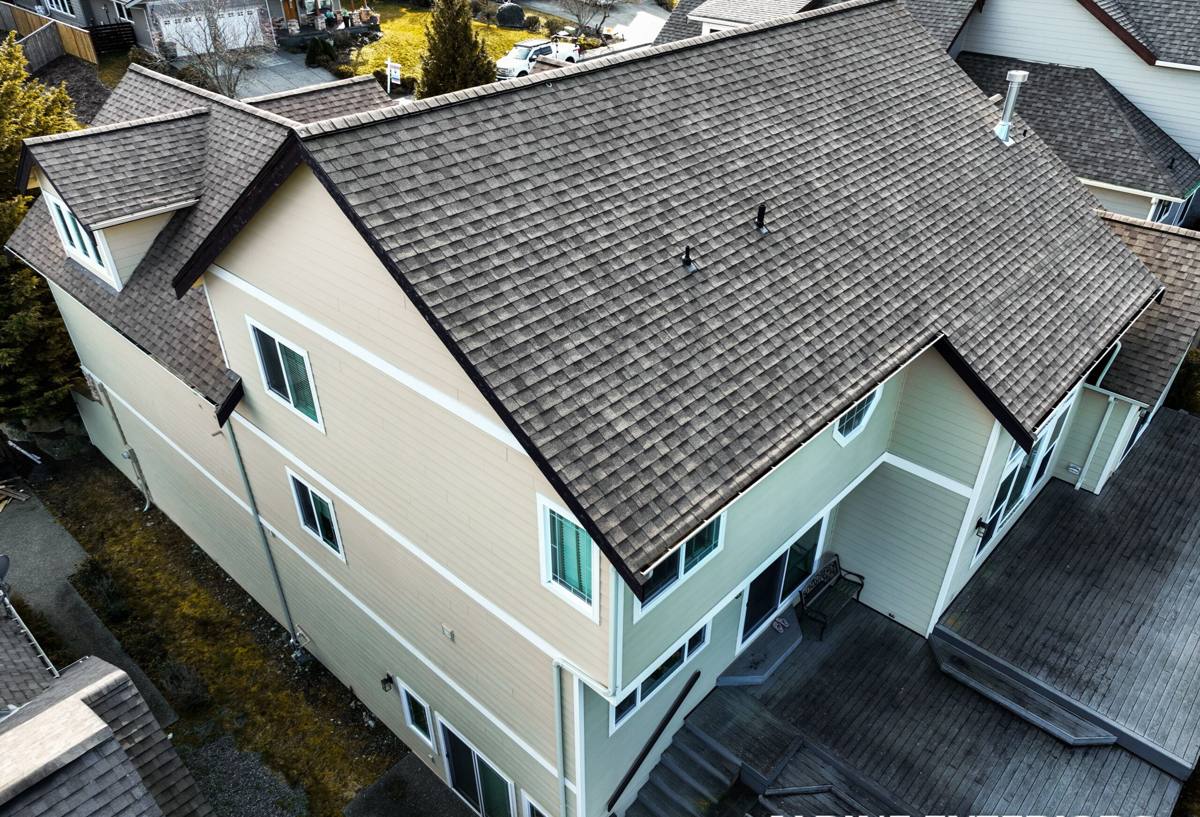
What Deer Harbor Sites Actually Demand
Every deck project on Orcas Island has to account for a few conditions that are common around Deer Harbor specifically:
- Salt exposure: homes closer to the water take direct salt spray during storms; even set-back properties get salt-bearing fog and wind. Untreated or lower-grade metal hardware corrodes noticeably faster here than in a dry inland town.
- Sustained moisture: our wet season runs roughly October through April, with long stretches where wood surfaces simply don't get a chance to fully dry between rain events. Anything that traps water against wood — poor flashing, tight board spacing, ledger connections without a drainage gap — becomes a rot problem faster than it would elsewhere.
- Moss and algae growth: shaded decks under fir and cedar canopy, which describes a lot of Deer Harbor lots, stay damp and grow moss on horizontal surfaces almost year-round. That growth isn't just cosmetic; it holds moisture against the decking and turns walking surfaces slick.
- Uneven, rocky terrain: a lot of the ground around Deer Harbor is glacial till and exposed rock outcropping, which affects footing depth, post placement, and sometimes calls for engineered foundation solutions instead of standard poured footings.
- Island logistics: material deliveries and specialty orders have to work around ferry schedules. A build that isn't planned with that in mind runs into avoidable delays.
Choosing the Right Decking Material
There's no single "best" decking material for Deer Harbor — the right choice depends on your budget, how much upkeep you're willing to do, and how close your lot sits to the water. We'll walk through the honest trade-offs rather than push whatever's easiest for us to install.
| Material | Upfront Cost | Moisture/Salt Performance | Maintenance | Typical Lifespan |
|---|---|---|---|---|
| Pressure-treated lumber | Lowest | Good if properly sealed and re-coated regularly | Annual cleaning, re-staining every 2-3 years | 15-20 years with upkeep |
| Western red cedar | Mid-range | Naturally rot- and insect-resistant; still needs sealing near salt air | Cleaning plus periodic oil or sealer | 20-25 years with upkeep |
| Composite decking | Highest | Excellent — doesn't absorb water or rot, though surface can still grow algae if shaded and damp | Periodic washing; no staining or sealing | 25-30+ years, manufacturer-dependent |
| Tropical hardwood (ipe, etc.) | High | Very good; dense grain resists moisture | Oiling to maintain color, or left to weather gray | 25+ years |
Composite has become a popular choice for waterfront and near-waterfront Deer Harbor properties specifically because it removes the re-staining cycle that salt air and rain make more frequent here. Cedar remains a strong choice where owners want a traditional look and are comfortable with regular maintenance. Whatever material you choose, the framing underneath it matters more than the surface — a composite deck built over poorly protected joists will still fail early.
The Structural Details That Actually Determine Lifespan
Ledger Board Flashing
Where a deck attaches to the house is the single most common failure point we find on older Deer Harbor decks. Without proper flashing — a metal drip cap plus a self-adhering waterproof membrane behind and over the ledger board — water works its way behind the board and into the house's rim joist. In a climate with this much sustained rainfall, an unflashed or poorly flashed ledger connection isn't a matter of if it leaks, it's when.
Joist and Beam Protection
Every cut end, notch, and top edge of a joist or beam should be sealed or wrapped with a protective tape barrier before decking goes down. Screw holes are entry points too. This is a step that's invisible once the deck boards are installed, which is exactly why it gets skipped on cheaper jobs — nobody sees it missing until the framing starts to fail years later.
Footings for Rocky or Sloped Ground
Standard 8-12" diameter poured concrete footings work fine on level, diggable soil. A meaningful number of Deer Harbor lots have shallow soil over rock, steep grade changes, or both. Depending on what we find when we dig test holes, that can mean adjusted footing sizes, helical piers, or an engineered foundation plan reviewed against San Juan County's frost depth and load requirements.
Board Spacing and Drainage
Gaps between boards need to be wide enough to let water pass through and air circulate underneath, without being so wide that they become a hazard or trap debris. Correct spacing also reduces the standing moisture that feeds moss growth on the deck surface itself.
Railings, Fasteners, and Hardware Built for Salt Air
Hardware is where a lot of decks quietly fail even when the visible structure looks fine. In a marine environment, standard galvanized fasteners can start showing rust streaks within a few seasons. We use stainless steel or heavy-duty coated fasteners rated for coastal/ACQ-treated lumber contact, along with structural connectors (joist hangers, post bases, hurricane ties) in a matching corrosion-resistant grade. It costs more than the hardware-store minimum, but replacing corroded connectors under a finished deck is a much bigger job than paying for the right ones the first time.
Railings need to meet current Washington building code for height and baluster spacing regardless of material, and any wood railing components benefit from the same moisture protection as the framing below. For most Deer Harbor builds, we recommend metal or composite balusters paired with a wood or composite top rail — it holds up to salt exposure with far less upkeep than an all-wood railing system exposed to open water views.
Permitting and Access on Orcas Island
San Juan County requires a building permit for most new decks and significant deck reconstructions, and properties near the shoreline may fall under additional shoreline setback review. We handle the permit process as part of the job rather than leaving it to the homeowner to sort out, and we factor realistic county review timelines into the project schedule rather than promising a start date we can't back up.
Material logistics are also part of planning a Deer Harbor project honestly. Lumber, composite decking, and hardware typically come over by ferry, and specialty orders (certain composite colors, engineered fasteners, custom railing components) need to be ordered with enough lead time to avoid a job sitting half-finished waiting on a delivery. We build that lead time into the schedule up front instead of discovering it mid-project.
Our Deck Building Process
- On-site assessment: we walk the lot, check soil and grade conditions, look at sun/shade exposure, and discuss how you actually use the space.
- Design and material selection: we go over the honest trade-offs between materials and layouts for your specific site and budget — no upselling toward whatever margin is best for us.
- Permitting: we prepare and submit the required San Juan County permit documentation.
- Framing and flashing: ledger flashing, joist protection, and footings go in first, and this is the stage where corners get cut on lesser jobs — we don't skip it.
- Decking, railing, and hardware installation: using corrosion-resistant fasteners and connectors throughout.
- Final walkthrough: we go over the finished deck with you, including what maintenance it will need and roughly when.
Keeping a Deer Harbor Deck Looking and Performing Its Best
Even a correctly built deck needs some seasonal attention in this climate. A short annual routine prevents most of the problems we get called out to fix on decks that were otherwise built well:
- Sweep debris off the deck surface regularly, especially fallen needles and leaves that hold moisture against the boards
- Wash the deck at least once a year with a deck cleaner or mild solution to remove early moss and algae growth before it takes hold
- Check and clear drainage gaps between boards so water isn't pooling
- Inspect the ledger flashing area annually for any signs of staining or moisture intrusion at the house connection
- Re-seal or re-stain wood decking on the schedule appropriate to the product — don't wait until it's visibly gray and dry
- Look over railing hardware and structural connectors for early rust or corrosion, particularly on decks closer to the water
- Trim back overhanging branches that keep sections of the deck shaded and damp longer than necessary
Why a Local Crew Matters for This Job
A deck built by a crew that hasn't worked on Orcas Island before often looks fine the day it's finished and starts showing problems within a couple of wet seasons — because the flashing detail, fastener grade, or footing approach was specified for a drier, less coastal climate. We work in San Juan County regularly, which means we've already seen how different materials and details actually hold up around Deer Harbor specifically, not just in a manufacturer's spec sheet. We also know how to plan around ferry-dependent material deliveries and San Juan County's permitting process, so the schedule we give you is one we can actually keep.
If you're planning a new deck or need an honest look at an existing one, we're glad to come take a look and walk you through what your specific site needs — no pressure, no obligation. The form below is the easiest way to get a free estimate started.