 Orcas Island Siding
 Crow Valley Homes Face a Different Kind of Weather Test
Crow Valley sits inland from the open shoreline that wraps most of Orcas Island, but "inland" on this island doesn't mean dry. The valley floor holds moisture longer than the exposed bluffs and waterfront lots nearby. Tree cover, pasture, and low-lying terrain slow down evaporation after a storm, and San Juan County's marine air still finds its way in on the wind even when you can't see the water from the house. The result is a siding environment that's arguably harder on a building than a straight waterfront lot: less direct salt spray, but more standing dampness, more shade, and a longer moss season because surfaces simply don't dry out as fast.
Add in driving rain that comes sideways off Pacific storm systems, and you've got a combination — persistent moisture plus limited sun exposure plus salt-laden air — that punishes any siding material with a weak point. Homeowners in Crow Valley don't need siding that merely looks good in a showroom. They need siding, flashing, and trim details engineered for a valley climate that stays damp longer than it should.
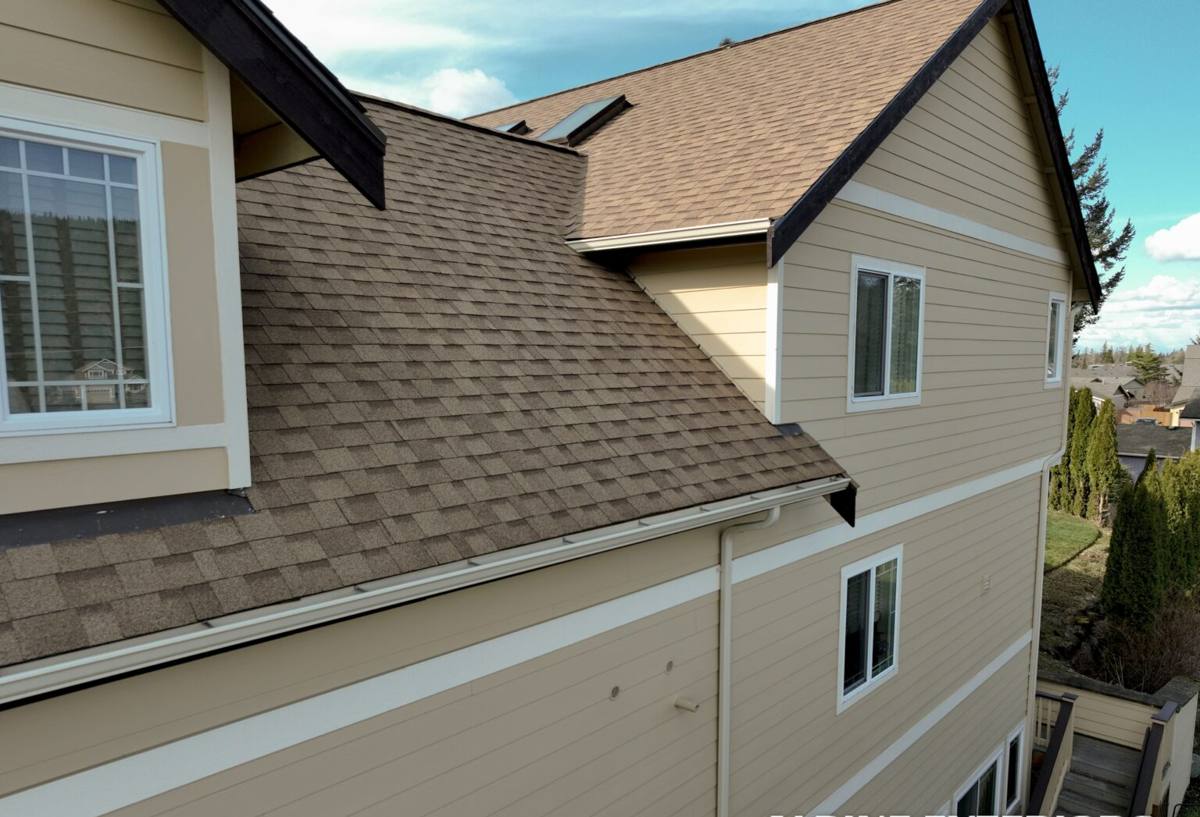
Why We Only Install James Hardie Fiber Cement Here
We install James Hardie fiber cement siding exclusively — not vinyl, not LP SmartSide, not Cemplank or Allura, not primed spruce or cedar. That's not a marketing position; it's the product decision we've made after weighing how each material actually performs in Pacific Northwest island conditions over decades, not just the first few years.
What Fiber Cement Does That Matters in a Valley Setting
- It's non-combustible, which matters given the wildfire risk that dry summers on Orcas Island can bring to wooded lots.
- It doesn't rot, swell, or feed fungal growth the way wood-based products can when moisture sits against a wall for days at a time.
- The ColorPlus factory finish is baked on and cured, not field-applied, so it resists the fading and chalking that repeated damp-dry cycles cause on site-painted siding.
- Hardie's HZ5 product line is engineered specifically for climates with cold, wet weather cycles — which describes a Crow Valley winter about as well as anything.
We're upfront that fiber cement isn't the cheapest siding on the market and it isn't the lightest to install. It's heavier, it requires specific fastening and cutting practices, and it takes a crew that respects those requirements. We've decided that trade-off is worth it because the alternative — a product that looks fine going up but struggles five or ten years in — costs homeowners more in the long run through repairs, repainting, or early replacement.
What a Correct Siding Installation Actually Involves
Siding failures on Orcas Island are rarely about the panel itself — they're almost always about what's underneath it or around its edges. A siding installation done right pays as much attention to the parts you never see again as to the parts you do.
The Details That Determine Whether Siding Lasts
- Weather-resistive barrier: A continuous, properly lapped water barrier behind the siding, with seams taped and penetrations sealed, so any moisture that gets past the siding has a way to drain instead of pooling against the sheathing.
- Rainscreen or drainage gap: A gap between the siding and the wall assembly lets bulk water drain and lets damp wood dry out — critical in a valley where surfaces stay wet longer after every storm.
- Flashing at every horizontal surface: Windows, doors, deck ledgers, and trim boards all need flashing that sheds water outward, not just caulk covering a gap.
- Manufacturer-specified clearances: Hardie siding needs proper clearance from grade, roofing, and decks — skip that and you've built a wick for ground and roof moisture straight into the wall.
- Correct fastening: Hardie specifies fastener type, spacing, and placement by product line and exposure. Getting this wrong doesn't show up immediately — it shows up as cracking or popped fasteners years later.
- Factory-cut edges sealed: Any field-cut edge of Hardie board needs to be sealed per spec so the cut edge doesn't wick moisture.
Skip any one of these and the siding can look perfect at hand-off while a slow moisture problem builds behind it — which is exactly how you get a Crow Valley home needing a full re-side ten years earlier than it should.
What We See on Older Homes in Crow Valley
Working around Crow Valley and the rest of Orcas Island, a few patterns show up again and again on homes with older or improperly installed siding:
- Moss and algae staining concentrated on north-facing and shaded walls, where tree cover blocks the sun that would otherwise dry the surface between rain events.
- Soft or delaminating trim and siding near ground contact, where grade was built up over time or landscaping was added without adjusting siding clearance.
- Caulk-dependent flashing details around windows and doors that were sound when new but have since cracked, letting water track behind the siding.
- Paint failure and surface chalking on site-finished wood siding that never fully dried between the valley's damp stretches.
None of these are unusual for the climate — they're what happens to siding systems that weren't detailed for sustained dampness. They're also largely preventable with the right materials and installation details from the start.
Comparing Siding Options for a Crow Valley Home
Homeowners often ask us to walk through why we settled on one product line. Here's an honest, side-by-side look at how the common options stack up on the factors that matter most in this climate.
| Material | Moisture Behavior | Fire Resistance | Long-Term Maintenance |
|---|---|---|---|
| James Hardie fiber cement | Doesn't absorb water or rot; factory finish resists moisture-driven fading | Non-combustible | Occasional wash; repaint only if ever needed, often decades out |
| Vinyl | Sheds water but can warp or gap at seams; doesn't address moisture behind it | Combustible, can melt/deform near heat | Low upkeep but limited repair options if damaged |
| LP SmartSide (engineered wood) | Wood-based core is more moisture-sensitive at cut edges and seams | Combustible | Requires diligent edge sealing and monitoring in wet climates |
| Cedar / primed spruce | Natural wood movement, prone to moisture absorption without diligent upkeep | Combustible | Regular refinishing/repainting cycle required |
Every product on that list has a legitimate place somewhere in the market. We simply don't think any of them hold up as consistently as fiber cement does in a climate that combines wet winters, salt-tinged air, and a valley setting that dries out slowly.
What Drives Siding Installation Cost Here
Every Crow Valley project is different, but the same handful of factors move the number the most. We give real, project-specific quotes after seeing the house — not a one-size number — but this is what to expect the estimate to weigh:
| Cost Factor | Why It Matters |
|---|---|
| Home size and wall complexity | More square footage and more corners, gables, and dormers mean more cutting, flashing, and labor time |
| Existing siding removal | Tear-off of old wood, vinyl, or damaged fiber cement adds disposal and labor beyond a straightforward install |
| Sheathing and moisture repair | If moisture has already reached the sheathing or framing, that repair happens before any new siding goes on |
| Trim and accessory work | Window and door trim, fascia, and corner details affect both material and labor cost |
| Product line and profile | HardiePlank lap siding, panel systems, and shingle profiles carry different material costs |
| Site access | Ferry-dependent material delivery and scheduling on Orcas Island can affect project timing more than mainland jobs |
How We Approach a Crow Valley Project
Our process is the same whether a house sits on open water or tucked back in the valley — but a valley home usually calls for extra attention to shaded, slow-drying wall sections.
- On-site assessment: We walk the exterior, check for existing moisture damage, and note shaded or low-airflow wall sections that need extra drainage detailing.
- Written estimate: A clear scope covering removal, repair if needed, materials, and installation — no vague allowances.
- Material staging: Because everything reaching Orcas Island comes off a ferry, we plan delivery and staging in advance so weather windows aren't wasted waiting on materials.
- Installation to Hardie spec: Weather barrier, drainage gap, flashing, clearances, and fastening all done to manufacturer specification, not shortcut for speed.
- Final walkthrough: We review the finished work with the homeowner and cover basic care going forward.
Caring for Hardie Siding in a Valley Climate
Fiber cement is low-maintenance, not no-maintenance. In a shaded, damp setting like Crow Valley, a few habits go a long way:
- Rinse siding periodically, especially on shaded north and east walls, to keep moss and algae from taking hold.
- Keep landscaping and mulch pulled back from the base of the walls so grade doesn't creep up on the manufacturer-specified clearance.
- Check caulking at trim and penetrations every year or two — caulk is a maintenance item even on a system built around drainage, not sealant alone.
- Keep gutters clear so overflow doesn't run down the wall face during heavy rain.
Why It Matters to Hire a Crew That Already Works This Area
Installing siding correctly on Orcas Island isn't the same job as installing it on the mainland. Material and equipment deliveries run on ferry schedules, weather windows for exterior work are shorter and less predictable, and every house has its own combination of tree cover, wind exposure, and terrain that changes how moisture behaves against the wall. A crew that already works Crow Valley and the rest of the island has already solved the logistics problem and has seen firsthand how local siding systems age — which shows up in fewer surprises, tighter scheduling, and installation details that match what this specific climate actually demands.
If you're planning a siding project in Crow Valley, we're happy to take a look at your home and put together a straightforward, no-pressure estimate — just fill out the form below.