 Orcas Island Siding
 Crow Valley sits inland from Orcas Island's open shoreline, a low, wooded valley of farms, pastures, and tree-lined lots that gives this part of San Juan County a different feel than the waterfront communities most people picture first. Homes here range from older farmhouses that have weathered decades of island winters to newer construction tucked into the tree line, and while Crow Valley doesn't take the direct wind and spray of an exposed shoreline, it deals with its own version of what makes Orcas Island hard on exterior siding: salt-laden air that reaches every part of the island, wind-driven rain during winter storms, and a moss season that heavy tree cover tends to stretch out longer than on more open, sun-exposed lots.
This page covers fiber cement siding specifically for Crow Valley homes — what the local conditions actually demand from a siding system, what a correct installation involves, and how our process runs when we work in this part of the island. We install James Hardie fiber cement exclusively, not vinyl, LP SmartSide, Cemplank, Allura, primed spruce, or cedar. That's a professional standard built around what holds up here over fifteen and twenty years, and Crow Valley's mix of shade, moisture, and older housing stock is a good illustration of why.
What Sets Crow Valley Apart From Orcas Island's Shoreline
Distance from open water changes the exposure a house deals with, but it doesn't remove it. Crow Valley properties generally see less direct wind-driven spray than a home sitting right on the water, but salt-laden air still moves across the whole island and reaches inland lots over time. What Crow Valley trades for that reduced wind exposure is more tree cover and, on a lot of properties, lower-lying ground that drains and dries more slowly than an open, breezy site. Both of those factors matter more for siding longevity than most homeowners expect going in.
A lot of Crow Valley's housing stock is older, including farmhouses and homes built well before current siding products and installation standards existed. That means re-siding projects here often turn up original wall assemblies with little or no modern weather barrier, which is worth knowing about before a project starts rather than discovering it once the old siding is off.
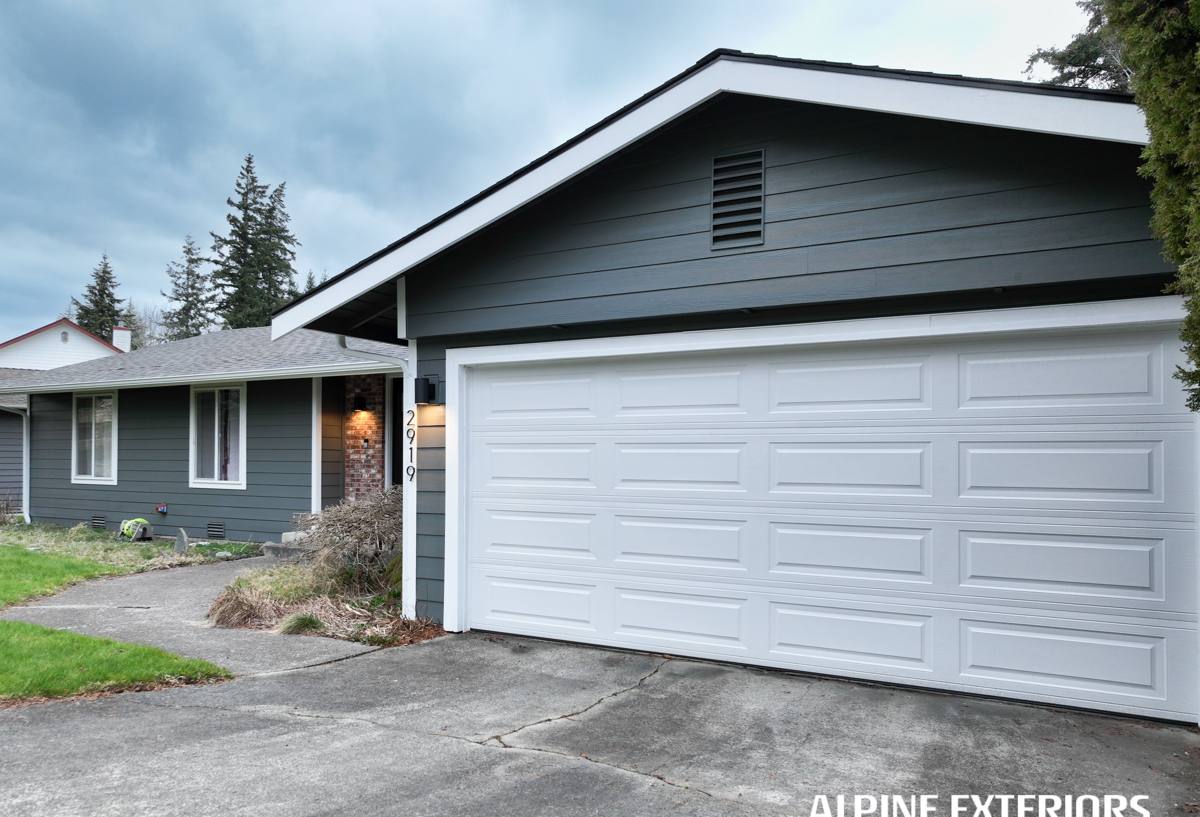
What Salt Air, Rain, and a Long Moss Season Do to a Valley Home
Salt Air Still Reaches Inland
Marine air off the water surrounding Orcas Island doesn't stop at the shoreline. It moves across the island and settles on every exterior surface, including homes well back from open water. Over years, that salt exposure accelerates corrosion on fasteners, flashing, and lower-grade trim hardware, and it speeds up the breakdown of any finish that depends on a field-applied coat rather than a factory process built to resist it.
Driving Rain and Wall Exposure
Winter storms in the San Juan Islands push rain sideways rather than letting it fall straight down, and that sideways load doesn't care whether a house sits on the water or half a mile inland in a valley. Wind-driven rain finds its way into lap joints, trim seams, and any gap in flashing at windows and doors. On older Crow Valley homes with original or minimal weather barriers, that's a much harder test than the house was built to withstand.
Tree Cover and an Extended Moss Season
This is where Crow Valley's inland, wooded character actually works against it compared to more open shoreline lots. Mild temperatures and steady moisture are enough on their own to support moss growth for most of the year in this climate, and heavy tree canopy on top of that keeps walls shaded and slow to dry after a storm passes. Shaded, north-facing walls under fir or madrona cover are exactly the conditions moss and mildew need to establish and spread, and any siding material that holds moisture against the substrate instead of shedding it becomes a long-term host for that growth.
Why We Install Only James Hardie Fiber Cement in Crow Valley
We narrowed our siding offering down to one manufacturer after seeing repeatedly what actually holds up on Orcas Island versus what performs well on a spec sheet and starts struggling a few wet seasons into real exposure. For a shaded, moisture-holding environment like Crow Valley, that difference matters more than it would somewhere drier and sunnier.
- Non-combustible core: fiber cement doesn't feed a fire the way wood-based siding can, a real factor for insurance underwriting on rural and wooded properties.
- Factory-applied ColorPlus finish: baked on in a controlled factory process rather than brushed on in the field, holding color and adhesion far longer under sustained shade, moisture, and salt exposure than a site-applied coat.
- Climate-engineered HZ5 formulation: built for regions with significant moisture exposure and freeze-thaw cycling, which matches this island's winter climate better than a product engineered for hot, dry regions.
- Dimensional stability: fiber cement doesn't swell, cup, or warp the way engineered wood siding can after repeated wetting cycles through a damp, shaded valley winter.
- A strong transferable warranty: backed by James Hardie provided the installation follows their published specifications, which matters on older Crow Valley homes changing hands over time.
Where Other Products Fall Short in a Shaded, Inland Setting
| Product | Common trade-off in Crow Valley's conditions |
|---|---|
| Vinyl siding | Panel seams give wind-driven rain an entry point behind the cladding, and it holds no real advantage over fiber cement in a shaded, slow-drying setting |
| LP SmartSide / engineered wood | Wood-strand core is moisture-sensitive at cut edges and fastener points, a real liability where walls stay damp longer under tree cover |
| Primed spruce or cedar | Needs an ongoing paint or stain schedule to resist rot; shaded, tree-covered walls are exactly where moss and mildew take hold fastest on an organic surface |
| Other fiber cement brands | May lack a climate-specific HZ-style formulation or the same factory-finish warranty depth James Hardie backs its ColorPlus system with |
What a Correct Fiber Cement Installation Involves
Fiber cement's reputation depends heavily on installation quality, especially on a valley property where slower drying times leave less room for error in the details. A rushed or out-of-spec install can undercut even the right material choice.
| Installation Detail | Why It Matters in Crow Valley |
|---|---|
| Manufacturer-specified clearances from grade, roofline, and deck | Keeps splash-back and standing moisture off the board edge on lower-lying, slower-draining lots |
| Correct fastener type, placement, and depth | Prevents cracking and resists the corrosion salt-laden air causes over time |
| Proper flashing at windows, doors, and penetrations | Directs wind-driven rain away from seams instead of letting it collect behind the siding |
| A functioning drainage plane or rain screen behind the siding | Lets any moisture that gets past the surface drain and dry instead of sitting against a shaded wall |
| Factory-cut edges used wherever possible; field cuts sealed per spec | Preserves the factory finish's protection at every edge, including trim cuts around older window openings |
How Our Process Works for a Crow Valley Home
Inspection and Estimate
Every project starts with an actual walk of the property — current siding condition, any sign of trapped moisture, and how sun, shade, and tree cover differ across the home's walls. On older Crow Valley homes we also look closely at what's likely behind the existing siding, since original construction here often predates modern weather barrier standards.
Tear-Off and Substrate Check
Once old siding comes off, we check the sheathing underneath for rot or soft spots before anything new goes up. This step matters more on an older, shaded property than on newer construction, since a slow-drying wall assembly gives hidden moisture damage more time to spread before it's found.
Weather Barrier and Flashing Detail
Most siding failures on this island trace back to water getting behind the cladding rather than through it. On a Crow Valley home, that means giving real attention to house wrap, window and door flashing, and any wall penetration, since a shaded wall that stays wet longer gives a small gap more time to do damage.
Installation to Manufacturer Spec
James Hardie's warranty depends on installation following their published specifications — correct fastener spacing, proper clearances, and correct field-cutting and sealing practices. We install to that spec as the baseline, not as an upgrade.
Final Walkthrough
We walk the finished job with the homeowner, cover care and maintenance expectations specific to a shaded, tree-covered property, and confirm the work matches what was estimated before calling the project done.
Signs a Crow Valley Home's Siding Needs Attention
- Moss or dark staining that returns quickly after cleaning, especially on shaded or north-facing walls
- Soft or spongy siding, particularly low on the wall or near grade on lower-lying lots
- Peeling paint or visible warping, most common on older wood-based siding
- Rust staining running down from fasteners or trim hardware
- Musty odors or staining on interior walls that back up to exterior siding
- Gaps or deteriorating caulk around window and door trim on older homes
- Siding with no documented replacement history, especially on original farmhouse construction
None of these automatically mean a full replacement is needed, but each is worth a professional look before another wet, shaded winter adds to the damage.
What Affects Fiber Cement Siding Cost in Crow Valley
| Factor | How It Affects the Estimate |
|---|---|
| Total square footage and number of stories | Drives material and labor cost directly, same as anywhere |
| Sheathing condition once old siding is removed | Older Crow Valley homes more often need substrate repair before new siding can go up |
| Trim and detail complexity around windows and rooflines | More cutting and flashing work adds labor time |
| James Hardie product line and color selected | HZ5 planks, panels, and trim vary in price depending on profile and finish |
| Access and staging on wooded or sloped lots | Some Crow Valley properties need more setup time than an open, flat shoreline lot |
| Island logistics for materials and crew scheduling | Runs around ferry schedules, which we build into the timeline upfront |
Quick Checklist Before Hiring for Siding Work in Crow Valley
- Ask what siding product they install and why, not just the price per square foot
- Confirm they check and address sheathing condition before closing up the wall
- Ask how weather barrier and flashing are handled at windows and roof-to-wall transitions
- Confirm current Washington contractor licensing and liability insurance
- Ask how they'd approach an older farmhouse wall assembly versus newer construction
- Get a clear, itemized explanation of the estimate, not just a total number
Why Hiring a Crew That Already Works Crow Valley Matters
Working this part of Orcas Island regularly, not showing up for a single job and moving on, shapes real decisions on site: which walls in a shaded valley lot stay wet longest, where extra flashing attention pays off on an older farmhouse, and which details are worth the extra time so a homeowner isn't dealing with a callback two winters later. It also means that if a warranty or maintenance question comes up years down the line, it's a call to a crew still working in the same valley, not a company that quoted the job once and moved on to a different market. That continuity matters anywhere, but it matters more on an island where getting an unfamiliar contractor back out isn't a same-day errand.
If your Crow Valley home needs new siding, or you'd just like an honest look at what's on the walls now, we're glad to come take a look and give you a straightforward, no-pressure estimate. Reach out using the form below to get started.