 Orcas Island Siding
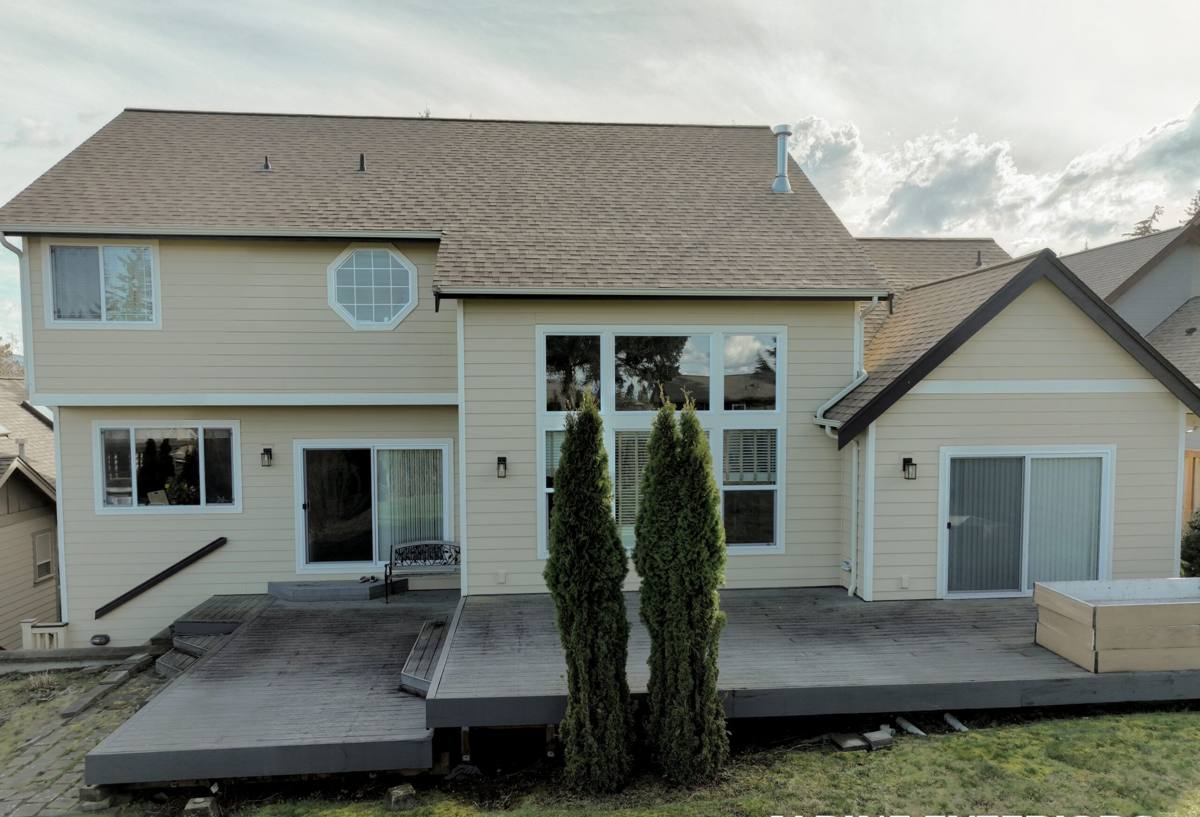
 Deck Repair in Crow Valley: A Different Set of Problems
Crow Valley sits inland from Orcas Island's shoreline, tucked between wooded hills in San Juan County. That location changes what a deck out here actually has to survive. You're not getting direct wave spray, but you are getting salt-laden marine air drifting in off the surrounding water, funneled and held in place by the valley's terrain. Combine that with heavy tree cover on many valley lots, and you get decks that stay damp longer than a similar structure out in open sun. Damp plus salt plus shade is exactly the combination that ages wood and hardware faster than most homeowners expect.
We repair a lot of decks in this part of Orcas Island, and the failure patterns are consistent enough that we can usually tell what we're dealing with before we even get a ladder out. This page covers what actually goes wrong, what a correct repair looks like, and how we handle the job from first look to final walk-through.
Why Orcas Island's Climate Is Hard on Decks
Salt Air
Salt doesn't just corrode fasteners near the water — it travels. In a valley setting, that airborne salt settles on deck surfaces and hardware and doesn't get washed off as often as it would on an exposed bluff lot that catches more direct rain and wind. Over time it accelerates corrosion in nails, screws, and joist hangers, especially anything that isn't rated for coastal exposure.
Driving Rain
San Juan County gets plenty of wind-driven rain off the Pacific storm track. On a deck, that means water doesn't just fall straight down — it gets pushed sideways into ledger connections, under flashing, and into any gap where a board has started to cup or a seam has opened up. Once water finds a way behind the decking or into the ledger area, rot starts somewhere you can't see it until it's advanced.
Moss Season
Crow Valley's tree cover and hill-shaded microclimate mean a long moss season — often most of the fall through spring. Moss holds moisture directly against the wood surface, blocks airflow, and keeps boards wet for days after the rest of the deck has dried. It also makes decking dangerously slick, which turns a cosmetic problem into a safety one.
Signs Your Deck Needs Repair, Not Just Cleaning
Some of these you can check yourself before calling anyone out. If you find more than one or two of these, it's worth having a professional look at the structure, not just the surface.
- Soft or spongy spots when you walk across the decking, especially near the house or stair landings
- Green or black moss buildup that comes back within weeks of cleaning
- Rust streaks running down from screw heads or around joist hangers
- Gaps or separation where the deck ledger meets the house wall
- Railings or posts that flex or wobble more than they used to
- Boards that have cupped, twisted, or pulled away from their fasteners
- Stair stringers or support posts with visible checking, splitting, or soft wood at ground contact points
- A musty smell coming from underneath the deck
What a Correct Deck Repair Actually Involves
A lot of "deck repair" jobs on the market amount to pressure washing and swapping a few obviously bad boards. That's fine for surface-level wear, but it doesn't address anything structural, and on a valley property with a long moss season, surface treatment alone tends to look good for one season and then relapse.
Our approach starts with figuring out whether the problem is cosmetic, structural, or both:
Cosmetic Issues
Surface graying, light moss, minor board cupping, and worn finish fall into this category. These get cleaned, sanded or replaced board-by-board as needed, and refinished or sealed.
Structural Issues
Rot in framing members, failed or corroded fasteners, a compromised ledger connection, undersized or rotted support posts, and stair or railing issues that affect safety. These require pulling decking to inspect the framing underneath — you cannot properly diagnose a ledger or joist problem from the top side only.
We won't recommend replacing an entire deck when a targeted structural repair will hold up, and we won't patch over rot with cosmetic fixes just to get a faster job done. The goal is telling you honestly which category your deck falls into before any work starts.
Repair vs. Replace: What Actually Drives the Decision
| Factor | Favors Repair | Favors Replacement |
|---|---|---|
| Framing condition | Joists and ledger are sound, isolated soft spots only | Widespread rot in joists, beams, or ledger connection |
| Age of structure | Under 15-20 years, built to a reasonable standard | Older structure with outdated framing or undersized members |
| Decking material | Wood or composite in generally good shape aside from a few boards | Decking failing across most of the surface, not just isolated boards |
| Fastener condition | Localized corrosion, easily replaced | Corrosion throughout hardware, hangers failing |
| Moss/moisture history | Manageable with better drainage and airflow fixes | Chronic moisture trapped by grade, shade, or design that repair can't fix |
Cost is always part of this conversation too, but we'd rather walk you through the actual condition of the structure than lead with a number. A repair that ignores a bad ledger connection is a bad deal at any price.
How Our Deck Repair Process Works
- On-site inspection: We walk the whole deck, check the ledger connection, look underneath at framing and post bases, and test boards and railings for movement.
- Honest assessment: We tell you what's cosmetic, what's structural, and what we'd genuinely leave alone.
- Scope and estimate: A written plan covering what gets repaired, what materials we're using, and why.
- Repair work: Rotted framing and boards are cut back to sound material and replaced — no patching over compromised wood. Fasteners are matched to the exposure the deck actually faces.
- Drainage and airflow check: Where moss or standing moisture has been a chronic issue, we look at whether grading, board spacing, or nearby vegetation is trapping water, and flag options to improve it.
- Final walk-through: We go over the repair with you, including any maintenance steps that will extend its life given the local climate.
Materials: Matching the Fix to the Exposure
There's no single "best" decking material for every Crow Valley property — it depends on how shaded the lot is, how much moss pressure the site sees, and what's already there.
Wood Decking
Pressure-treated framing lumber and cedar or similar decking remain a solid, cost-effective choice for repairs, provided the wood is properly sealed and the site gets enough airflow to let it dry between rains. In heavily shaded, moss-prone spots, wood needs more consistent upkeep to perform well long-term.
Composite Decking
Composite boards resist rot and hold up well against moisture, which makes them a strong option for shaded, damp areas of a valley lot. The trade-off is that composite doesn't fix a bad substructure — it still needs sound, dry framing underneath, and it comes at a higher upfront material cost.
Fasteners and Hardware
Given the salt air moving through the valley, we use fasteners and joist hangers rated for coastal or high-corrosion exposure rather than standard interior-grade hardware. This is one of the most common corners cut in past repairs we see, and it's usually the reason a "repaired" deck starts failing again within a couple of years.
Why a Crew That Already Works Crow Valley Matters
Deck repair on Orcas Island comes with logistics that don't apply on the mainland. Materials and crews often move by ferry, which means scheduling has to account for sailing times and weather delays, not just calendar availability. A contractor who already works this island builds that into the plan instead of discovering it mid-job.
Just as important is knowing the difference between a waterfront deck problem and a valley deck problem. A crew used to bluff-front homes might over-prescribe for salt spray a Crow Valley property doesn't get directly, while under-prescribing for the shade and moss issues it does get. Local, repeat experience in this specific part of San Juan County means the diagnosis matches the actual site conditions, not a generic coastal checklist.
Keeping a Repaired Deck in Good Shape
Once a repair is done right, a few habits go a long way in this climate:
- Clean moss and debris off the surface at least once each fall before the wet season sets in
- Keep gutters and downspouts clear so runoff isn't draining directly onto or under the deck
- Trim back overhanging branches and nearby brush to improve airflow and sun exposure where possible
- Check fasteners and railings for movement once a year, ideally before winter storms arrive
- Reseal wood decking on the manufacturer's recommended schedule rather than waiting for visible graying
If you're noticing soft spots, recurring moss, or a deck that just doesn't feel as solid as it used to, we're happy to come take a look. We offer free, no-pressure estimates for Crow Valley homeowners — use the form below to get one scheduled.