 Orcas Island Siding
 Siding Replacement for Homes Near Cascade Lake
Homes in the Cascade Lake area of Orcas Island sit in a microclimate that's a little different from the rest of San Juan County. Much of this pocket of the island sits under heavy evergreen canopy near Moran State Park, which means more shade, more moisture retention, and more moss than homes out in the open along the shoreline. Add in the salt air that blows across every part of Orcas Island and the driving rain that comes through in the wetter months, and you get a combination that's genuinely hard on exterior siding. This page covers what siding replacement actually looks like for homes in this specific area — not a generic overview, but what we've learned installing and replacing siding on homes that deal with this exact mix of shade, moisture, and salt exposure.
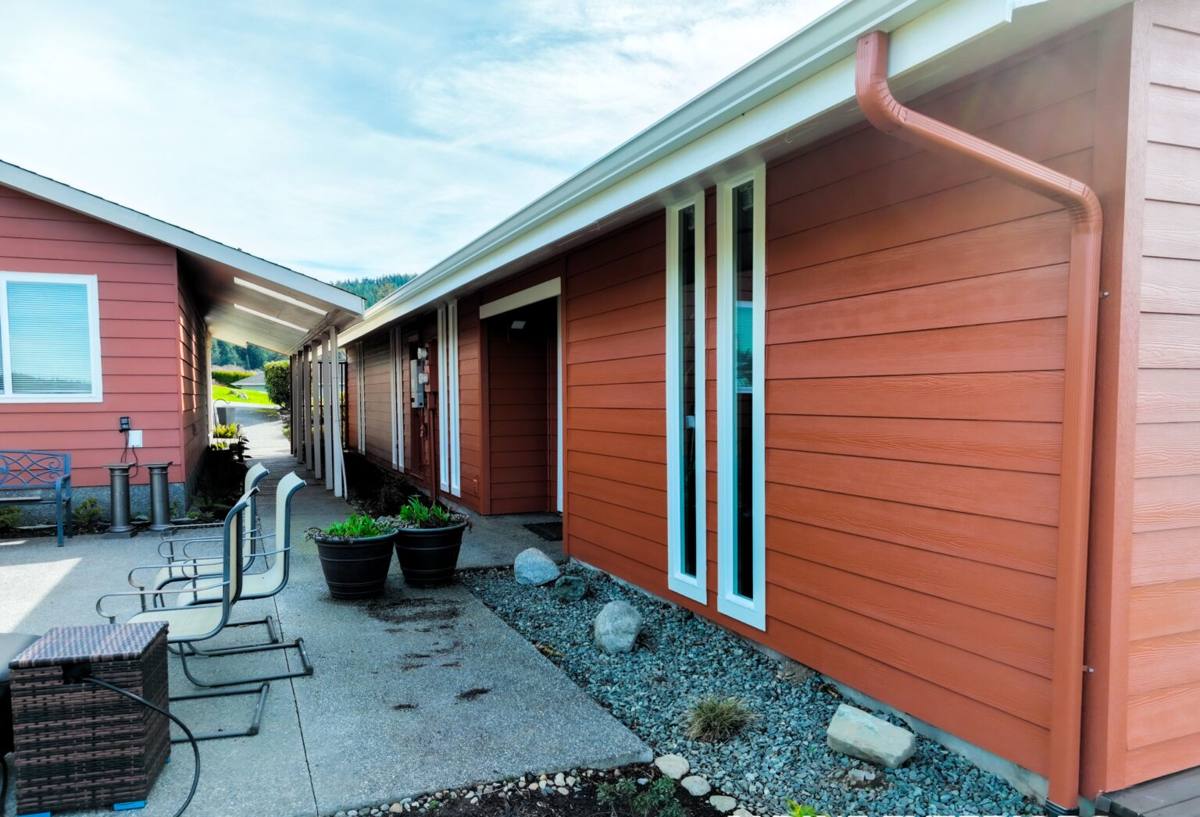
Why This Microclimate Is Tougher on Siding Than It Looks
A lot of homeowners assume siding failure is just about age. On Orcas Island, and especially in the tree-covered pockets around Cascade Lake, it's more often about how slowly a wall assembly dries out between rain events.
Shade and slow drying
Homes tucked under fir and cedar canopy near the lake and park don't get the same sun exposure as a home out on open ground. Less direct sun means siding stays damp longer after every rain, which is exactly the condition moss, algae, and mildew need to take hold. Over years, that constant damp-dry cycle is what breaks down siding that isn't built for it — not one bad storm, but hundreds of slow ones.
Salt air, island-wide
Every home on Orcas Island, including those set back from the water near Cascade Lake, sits in a marine environment. Salt-laden air moves with the wind across the whole island and settles on exterior surfaces, accelerating corrosion on fasteners and trim and breaking down finishes that aren't rated for coastal exposure.
Driving rain off the water
San Juan County gets weather systems that come through with real force, and wind-driven rain doesn't just fall on a wall — it gets pushed sideways into laps, seams, and trim joints. Siding and flashing details that work fine in a calmer climate can let water in here if they're not installed with that wind-driven moisture in mind.
A long moss season
Between the shade, the moisture, and the mild temperatures, moss and algae have a long growing window on Orcas Island — often close to year-round in the shadier spots. Moss holds moisture directly against the siding surface, which is a slow but steady way to shorten the life of any material that isn't moisture-resistant at its core.
Signs a Cascade Lake Home Needs Siding Replacement
Because of the shade and moisture in this area, siding problems here often show up differently than they would on a sunnier lot. Here's what we look for during an inspection:
- Green or black staining that keeps coming back within weeks of being cleaned
- Soft or spongy spots when you press on siding, especially low on the wall or near ground contact
- Visible gaps, cracking, or separation at seams and corner trim
- Paint that's bubbling, peeling, or won't hold for more than a couple of years
- Siding that feels cool and damp to the touch well after a dry spell
- Warping, bowing, or wavy panel lines, especially on shaded elevations
- Moss or algae growth that returns almost immediately after pressure washing
- Interior signs — musty smell, discolored drywall, or damp insulation near exterior walls
Any one of these on its own might just mean a cleaning or a repair. Several of them together, especially on the shaded or lake-facing side of the house, usually means the siding is past the point where patching makes sense.
Why We Only Install James Hardie in This Climate
We install James Hardie fiber cement siding exclusively — we don't install vinyl, LP SmartSide, Cemplank, Allura, primed spruce, or cedar. That's a deliberate standard, not a sales pitch, and it matters more here than almost anywhere else in the county because of how much moisture and shade this particular area deals with.
Vinyl's limits in a shaded, wet microclimate
Vinyl is inexpensive and low-maintenance in the right conditions, but it's a thin plastic product that expands and contracts with temperature and can crack or warp under wind-driven rain and impact. It also doesn't hold paint if a homeowner ever wants to change the color down the road. In a shaded, moisture-heavy pocket like this, vinyl's seams and lap joints are more exposed to the kind of driving rain that finds its way behind the material over time.
Wood and engineered wood trade-offs
Cedar and primed spruce are attractive, traditional choices, but wood is an organic material that needs consistent maintenance — repainting, caulking, and moisture monitoring — to hold up. LP SmartSide is an engineered wood product with a resin-treated strand core that resists moisture better than raw wood, but it's still wood-based, meaning cut edges and any moisture intrusion require prompt attention. In a spot that stays damp under tree cover for long stretches, that maintenance schedule gets a lot less forgiving.
What fiber cement gets right
James Hardie siding is a cement-based composite, not wood or plastic. It doesn't rot, it's not a food source for moss or algae the way wood is, it holds paint far longer than wood substrates, and it's rated non-combustible — a real advantage on an island where wildfire risk and limited fire department response times are both real considerations. It's also engineered specifically for climates like this one.
The HardieZone System — Built for the Pacific Northwest
James Hardie doesn't make one siding product for the whole country. Their HardieZone system engineers formulations by climate zone, and the Pacific Northwest — including the San Juan Islands — falls into the HZ5 zone, built for high-moisture, freeze-thaw-capable climates. That means the composition of the siding itself, not just the paint on top, is matched to the kind of weather Cascade Lake homes actually deal with.
On top of that, Hardie's ColorPlus finish is a factory-applied, baked-on finish that resists fading and chipping far better than field-applied paint, and it comes backed by a substantial finish warranty separate from the product warranty on the siding itself. For a shaded, damp property where paint failure is usually the first visible sign of trouble, that factory finish is one of the most practical advantages of the system.
Material Comparison for This Climate
| Factor | James Hardie Fiber Cement | Vinyl | Wood / LP SmartSide |
|---|---|---|---|
| Moisture resistance | Engineered for high-moisture zones (HZ5) | Resists water itself, but seams can leak | Vulnerable at cut edges and joints |
| Moss/algae resistance | Not an organic food source | Doesn't feed growth, but traps moisture behind panels | Wood fiber can support growth if damp |
| Finish longevity | Factory ColorPlus finish, long warranty | Color molded in, can fade/chalk | Field-applied paint, needs repainting |
| Fire rating | Non-combustible | Combustible (melts/burns) | Combustible |
| Maintenance | Periodic wash, repaint on a long cycle | Low, but limited repair options | Regular repainting and caulking |
| Typical lifespan when installed to spec | Multiple decades | 15-30 years | Varies widely with maintenance |
What Correct Installation Involves
Fiber cement siding is only as good as its installation, and that's especially true in a wind-driven-rain climate like this one. A correct siding replacement on a Cascade Lake area home involves more than nailing up new panels.
Tear-off and inspection
Old siding comes off down to the sheathing, and we inspect for hidden rot, damaged framing, or moisture that's already gotten behind the old material — common in shaded homes where a leak can go unnoticed for years under wood or older siding.
Weather-resistive barrier and flashing
A properly lapped weather-resistive barrier goes on before any siding, along with correctly integrated flashing at windows, doors, and any wall penetrations. This is the layer that actually stops wind-driven rain from reaching the sheathing — the siding itself is the second line of defense, not the only one.
Proper clearances
Hardie's own installation instructions call for minimum clearances from grade, roof lines, and decks. In a damp, shaded setting, we treat these clearances as non-negotiable, since ground and roof moisture are already working against the wall.
Fastening and joint treatment
Correct fastener spacing, corrosion-resistant fasteners for a marine environment, and properly sealed or shiplap-style joints all matter more here than in a drier inland climate, where a shortcut might not show up as a problem for years.
Ventilation behind the cladding
Where the assembly calls for it, a rainscreen or drainage gap helps the wall dry out between storms instead of staying damp — directly addressing the slow-drying issue that shaded, tree-covered lots deal with.
Our Process on Orcas Island
Working on an island changes how a siding job needs to be planned, and it's part of why a crew that already works this area matters. Materials, equipment, and crew all move by ferry, so a contractor unfamiliar with island logistics can turn a straightforward job into a scheduling headache with materials stuck on the mainland or a crew burning half a day on transit.
- On-site inspection and assessment of your current siding, framing, and moisture conditions
- A written scope and estimate covering removal, repair of any hidden damage, and full Hardie installation
- Material ordering and ferry logistics planned around your project timeline, not worked out after the fact
- Tear-off, sheathing repair as needed, and correct weather barrier and flashing installation
- Hardie siding installation to manufacturer spec, including fastening, clearances, and joint detailing
- Final walkthrough so you understand what was done and what maintenance to expect going forward
Living With Hardie Siding in a Shaded, Damp Setting
Even the right material benefits from a little ongoing attention in a climate like this. A rinse-down once or twice a year knocks back the moss and algae before it gets a foothold, and keeping gutters and downspouts clear prevents overflow from running straight down the siding, which is a common cause of localized staining and moisture problems on shaded walls. Trimming back branches that overhang the roof or walls also helps sunlight and airflow reach the siding, which speeds up drying between rain events. None of this is heavy maintenance — it's the kind of upkeep that keeps a correctly installed fiber cement system performing for decades in this environment.
Why a Crew That Already Works Cascade Lake Matters
Siding installation instructions don't change from job to job, but judgment does — knowing where a shaded, damp wall needs extra attention to flashing or drainage, understanding how island logistics affect scheduling, and recognizing the specific moss and moisture patterns common to this part of Orcas Island all come from doing the work here repeatedly, not from a manual. A crew that already understands this microclimate is going to catch problems a generic mainland crew might miss, and plan a project timeline that actually accounts for ferry schedules and material lead times.
If your home near Cascade Lake is showing signs of siding wear, or you're planning ahead before the next wet season sets in, we're happy to take a look and walk you through what we find. Reach out below for a free, no-pressure estimate — no obligation, just an honest assessment of where your siding stands.