 Orcas Island Siding
 Roof Repair for Cascade Lake Homes
Homes around Cascade Lake sit in one of the shadier, damper pockets of Orcas Island. Tall conifers ring much of the lake, the tree canopy keeps roof surfaces from drying out between storms, and the combination of salt-laden air drifting up from the Sound and steady winter rain puts real, ongoing stress on a roof. A repair that would hold up fine on an open, sun-exposed lot elsewhere in San Juan County can fail early here if it doesn't account for how much longer these roofs stay wet.
This page covers roof repair specifically for the Cascade Lake area — what tends to go wrong, what a repair should actually include, and how we approach the work when we're called out to a home in this part of the island.
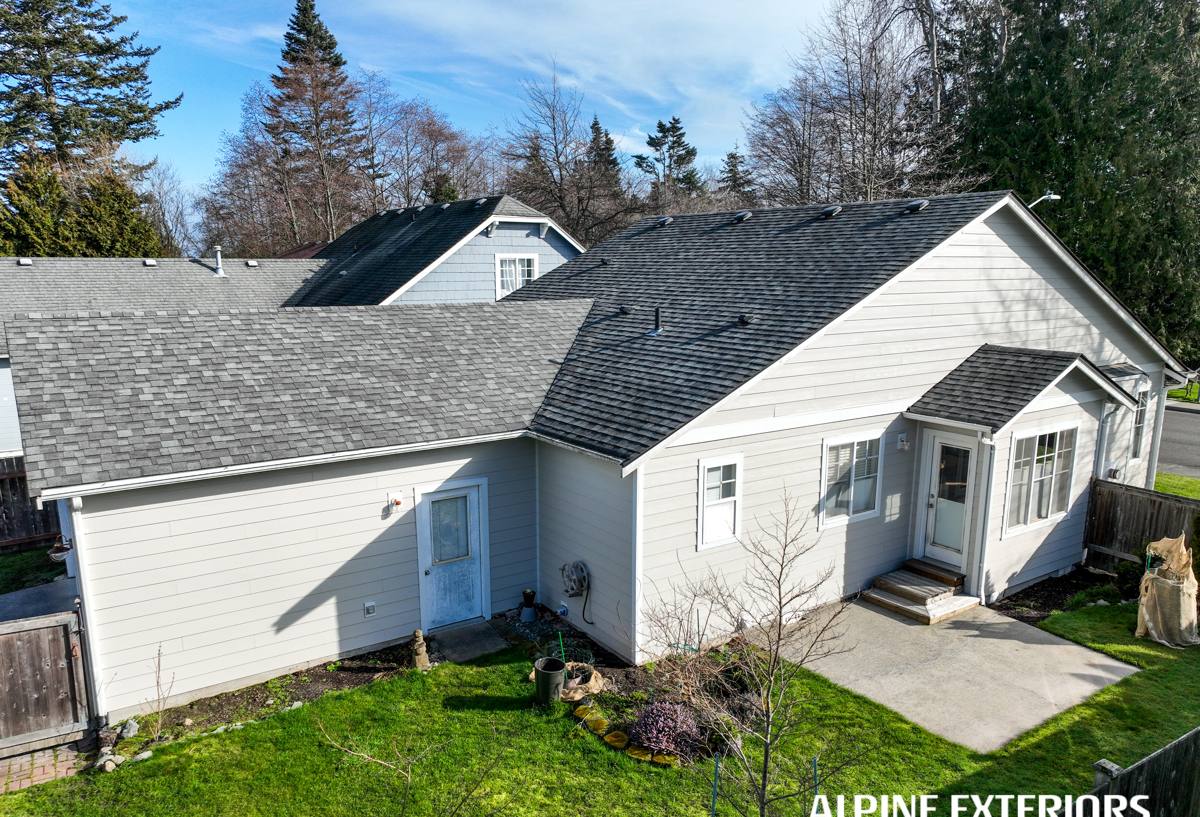
Why Roofs Around Cascade Lake Take a Beating
Three things combine here in a way that doesn't happen everywhere on Orcas Island:
- Shade and slow drying. Dense tree cover near the lake blocks sun and wind from reaching the roof deck, so shingles, moss, and organic debris stay damp for days after a storm instead of drying out in an afternoon.
- Moss and organic growth. Consistent moisture plus overhanging trees is exactly what moss, lichen, and algae need to establish. Once moss gets a foothold under shingle tabs or in valleys, it holds water against the roofing material and works its way under the edges over time.
- Salt air. Orcas Island's marine environment carries fine salt particles that accelerate corrosion on exposed metal — flashing, fasteners, gutter hardware, and vent caps age faster here than they would inland.
None of this means Cascade Lake roofs are doomed to constant problems. It means the repair work has to be matched to the conditions — using the right flashing metals, sealing details correctly, and not just patching over the symptom.
Signs You Need a Repair, Not Just a Cleaning
A lot of homeowners around the lake reach out first about moss on the roof, and sometimes that really is just a cleaning job. But moss and standing moisture often hide or cause damage underneath. Before you decide it's cosmetic, check for these:
- Water stains on ceilings or in the attic, especially after a heavy rain
- Shingles that are cracked, curling at the edges, or missing granules (look for grit collecting in gutters)
- Moss growing thick enough that you can't see the shingle surface underneath it, particularly in valleys or on the shaded, north-facing slope
- Rust streaks or gaps at flashing around chimneys, skylights, or roof-to-wall transitions
- Sagging or soft spots when the roof is viewed from a distance
- Daylight visible through the roof deck from inside the attic
- Gutters overflowing or pulling away from the fascia during storms
If you're seeing any of these, it's worth having someone look at the roof itself rather than just clearing the moss and hoping the problem goes away.
What a Correct Roof Repair Involves
A Real Inspection First
We don't quote a roof repair sight unseen. A proper inspection means getting on the roof (weather permitting) and checking the attic from below — looking at the decking, insulation, and framing for signs of moisture that don't show up from the ground. On a shaded, lake-adjacent lot, the failure point is often not where the stain shows up inside; water travels along rafters and sheathing before it drips through, so tracing it back matters.
Flashing and Underlayment, Not Just Shingles
Most leaks we find in this area aren't from the field of the roof — they're from flashing: around chimneys, skylights, plumbing vents, and where a roof meets a wall or a lower roofline. Salt air corrodes cheaper or older flashing faster, so repairs here should use corrosion-resistant metal and be properly lapped and sealed, not just caulked over. Where underlayment has failed or wasn't installed to current standards, we replace it as part of the repair rather than leaving it in place under new shingles.
Matching Materials Correctly
A patch repair should match the existing roofing in profile, color, and weight as closely as possible. Mismatched shingles are a cosmetic problem, but more importantly, mixing incompatible materials or thicknesses can create uneven wear and new water paths at the seams. When an exact match isn't available, we'll walk you through the closest honest option rather than guessing.
Moss and Debris Management
Repairing a roof without addressing what's feeding the moss just buys you a year or two. That means clearing needles and debris from valleys, gutters, and against any roof-wall intersections, and treating or removing moss without damaging the shingle surface underneath. We also look at whether nearby limbs are keeping a section of roof shaded and wet enough to invite regrowth, and we'll flag that as a separate item — trimming is outside our scope, but it's worth mentioning if it's driving the problem.
Repair or Replace?
Not every damaged roof needs full replacement, and not every roof is a good candidate for another round of patching. Here's how we think about it:
| Factor | Favors Repair | Favors Replacement |
|---|---|---|
| Age of roof | Under 60–70% of expected material lifespan | Near or past expected lifespan |
| Extent of damage | Isolated to one area, flashing, or a section | Widespread across multiple slopes |
| Decking condition | Solid, dry decking under the damaged section | Soft, rotted, or repeatedly wet decking |
| Moss/algae history | First occurrence, manageable | Chronic, returning yearly despite cleaning |
| Prior repairs | Well-documented, few in number | Multiple patch jobs stacked over time |
We'll always tell you honestly which side of that line your roof falls on. If a repair is the right call, that's what we'll recommend and price — we don't push replacement on a roof that has good years left in it.
Materials We Use — and Why
For repair work around Cascade Lake, we lean toward materials and details that hold up to sustained dampness and salt exposure rather than the cheapest available option:
- Corrosion-resistant flashing (rather than uncoated or lower-grade metal) around chimneys, valleys, and vents, since salt air shortens the service life of standard flashing considerably.
- Synthetic or high-quality underlayment under any repaired section, because it handles prolonged moisture exposure better than older felt products in a shaded, slow-drying spot.
- Shingle or roofing material that matches the home's existing product line where possible, so the repaired section weathers and ages consistently with the rest of the roof.
Where a homeowner asks about a specific low-cost patch material or a shortcut fix, we'll be straight with you about the trade-off — some products are cheaper up front but demand more frequent maintenance or don't seal as reliably in a wet, shaded microclimate like this one. We'd rather explain that trade-off than install something we don't expect to hold up.
Our Process, Start to Finish
- Initial call or form. Tell us what you're seeing — stains, moss, missing shingles, a leak — and roughly where on the roof.
- On-site inspection. We get eyes on the roof and, where accessible, the attic, and identify the actual source of the problem, not just where the symptom shows up.
- Written estimate. You get a clear scope of work and price before anything is scheduled — no surprises once we're on the roof.
- The repair itself. We work efficiently but don't cut corners on flashing, underlayment, or fastening, since those are the details that determine whether a repair lasts.
- Cleanup and walkthrough. Debris and old material are removed from the property, and we'll walk you through what was done and what to watch for going forward.
Why Hire a Crew That Already Works Cascade Lake
Roofing in a heavily shaded, lake-adjacent, salt-air setting isn't the same job as roofing on an open, sunny lot elsewhere in San Juan County. A crew that already works around Cascade Lake knows which slopes on a given orientation tend to hold moss, how fast flashing corrodes in this specific air, and which repair shortcuts don't hold up here even if they'd be fine somewhere else. That local pattern recognition shows up in fewer callbacks and repairs that are sized correctly the first time — not underbuilt to save cost, not oversold when a smaller fix would do.
We're a siding and exterior contractor based on Orcas Island, and roof repair around homes like yours near Cascade Lake is work we do regularly, not an occasional add-on to a different specialty.
If you're seeing moss buildup, a stain on the ceiling, or just want an honest opinion on what your roof needs, we're glad to take a look. Reach out for a free, no-pressure estimate using the form below.