 Orcas Island Siding
 Why Decks Near Cascade Lake Wear Out Faster Than Homeowners Expect
Cascade Lake sits in one of the shadiest, dampest pockets of Orcas Island, ringed by tall conifers and thick understory that block sun and trap moisture close to the ground. A deck built for a sunny, open lot on the mainland simply doesn't hold up the same way here. Framing that would dry out in an afternoon on a south-facing lot can stay damp for days under the tree canopy around the lake, and that constant dampness is the single biggest reason decks in this area fail years before their expected lifespan.
We're not talking about cosmetic wear. We're talking about hidden rot in ledger boards, rusted-through fasteners, and joists that have lost real structural capacity — problems that don't show up until someone steps on a soft spot or a railing wobbles more than it should. Replacing a deck the right way here means building for the site conditions, not just swapping old boards for new ones.
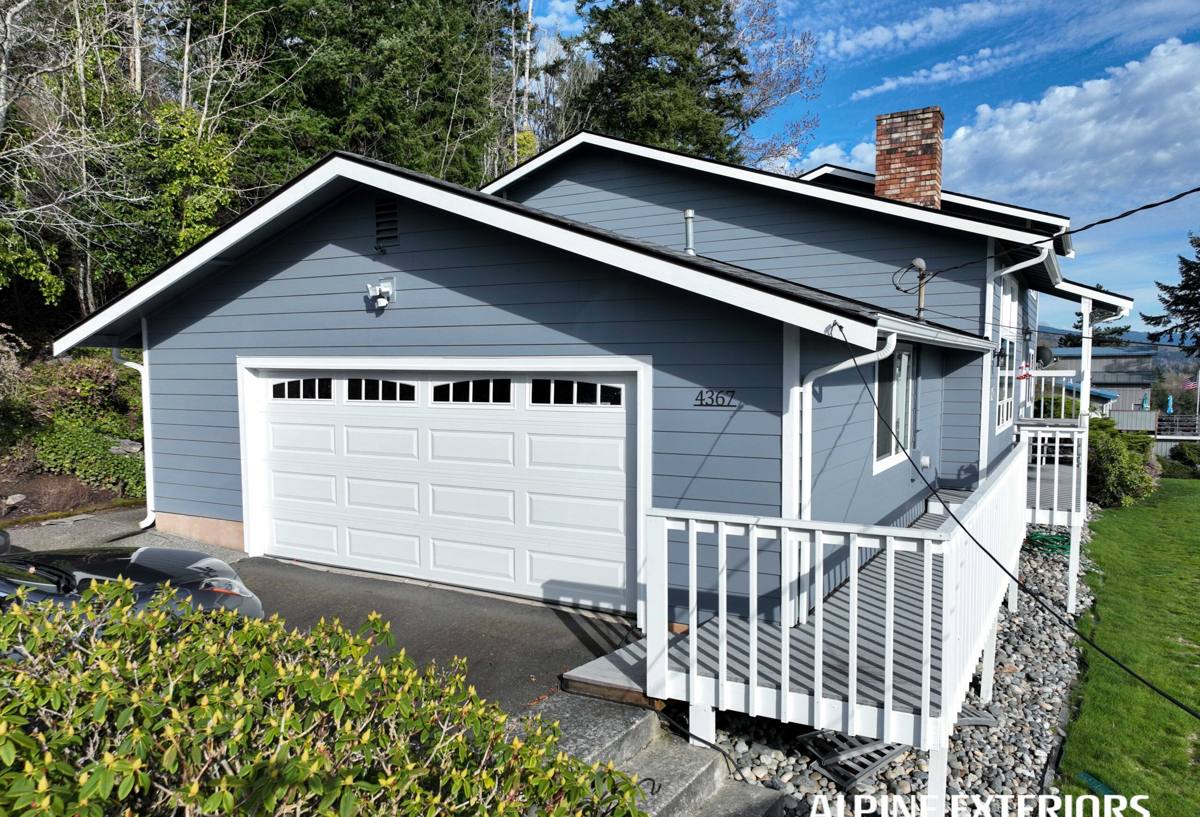
The Cascade Lake Climate Problem
Shade and Moss
The tree cover around Cascade Lake keeps decks in shadow for much of the day, especially through fall, winter, and early spring. Without direct sun to dry surfaces between rain events, moss and algae get a foothold on decking, stair treads, and railing caps. Beyond being slippery underfoot, moss holds water against wood fibers and finishes, which accelerates rot and breaks down coatings faster than a full-sun deck would ever experience.
Moisture and Driving Rain
San Juan County gets its share of driving rain, and wind-driven water finds its way into gaps that a calm rain never would — around ledger connections, under loose flashing, into end-grain cuts that weren't sealed. On a shaded lot near the lake, that water doesn't evaporate quickly. It sits, it soaks in, and over a few seasons it does real damage to framing lumber that looks fine from the surface.
Salt-Laden Air
Even set back from the shoreline, Orcas Island homes sit in a marine environment, and salt-laden air moves across the island with the weather. That air accelerates corrosion on fasteners, brackets, and any hardware that isn't rated for it. A deck built with standard interior-grade screws or connectors will show rust bleed and weakened joints well before a comparable deck built inland on the mainland.
Repair or Replace? Signs It's Time
Not every tired-looking deck needs a full replacement, but there are signs that repair is just delaying the inevitable — and spending money on repairs to a deck with failing structure is money that doesn't carry forward into the replacement.
- Soft, spongy, or springy spots in the decking or stair treads
- Visible rot, discoloration, or fungal growth at the ledger board or post bases
- Fasteners that are rusted, backing out, or leaving black streaks in the wood
- Railings or stair stringers that flex or wobble under normal weight
- A ledger board attachment that predates current flashing standards
- Persistent moss or algae that returns within weeks of cleaning
- Gaps opening between deck boards wide enough to catch a heel or drop small items through
If you're seeing two or more of these, it's worth having the structure evaluated before deciding between repair and replacement. Surface problems can often be patched; framing and connection problems generally can't be fixed piecemeal without compromising the finished result.
What a Correct Deck Replacement Actually Involves
Ledger and Flashing
The ledger board — where the deck attaches to the house — is the single most common source of failure on decks in this climate. It has to be properly flashed to shed water away from the house framing, not just bolted on and caulked. On a shaded, damp lot near Cascade Lake, we treat ledger flashing as non-negotiable, not an upgrade option.
Framing and Joists
Joists, beams, and posts need to be sized correctly for the deck's actual use and span, and the wood or engineered lumber used should be rated for ground contact or exposure as appropriate to each component. Skipping this and reusing old framing to save money is one of the most common shortcuts we see — and one of the most expensive mistakes to fix later.
Fasteners and Hardware
Given the salt air and moisture exposure here, we use stainless steel or coated fasteners and structural connectors rated for exterior, corrosive environments. Standard galvanized hardware can look fine for a season or two before it starts to fail from the inside out — by the time you see rust bleed on the surface, the connection underneath has usually already lost strength.
Decking Surface
Whatever surface material you choose, it has to be installed with proper spacing for drainage and airflow underneath. On a shaded site, tight board spacing traps moisture and accelerates both rot (on wood) and moss growth (on any material). Gapping is a small detail that makes a real difference over the life of the deck.
Choosing a Decking Material for a Shaded, Damp Lot
There's no single "best" decking material — the right choice depends on how much maintenance you want to do, your budget, and how much direct sun the deck actually gets. Here's how the common options compare for a site like Cascade Lake specifically.
| Material | Moisture & Moss Behavior | Maintenance | Typical Lifespan |
|---|---|---|---|
| Pressure-treated wood | Absorbs moisture readily; needs regular sealing to resist rot and moss in shade | Annual cleaning and periodic sealing/staining | 10-15 years in shaded, damp conditions |
| Cedar | Naturally rot-resistant but still needs finish upkeep to shed moisture and resist moss | Regular cleaning; refinishing every few years | 15-20 years with upkeep |
| Standard composite | Won't rot, but uncapped composites can absorb some moisture and stain in constant shade | Periodic washing to control surface moss/algae | 20-25 years |
| Capped composite / PVC | Sheds water and resists moss growth best of the group; low absorption | Occasional washing | 25+ years |
We're honest with homeowners about the trade-offs here rather than pushing one product. Real wood has a look many people prefer and a lower upfront cost, but it demands consistent maintenance to hold up in a shaded, damp environment — skip a season of sealing and you can lose ground fast. Capped composite costs more up front but performs the best against the specific conditions around Cascade Lake: low light, high moisture, and long moss season.
Our Deck Replacement Process
- On-site evaluation. We inspect the existing deck's framing, ledger connection, and posts to confirm what's actually driving the need for replacement, not just what's visible on the surface.
- Design and material selection. We walk through decking, railing, and hardware options with you, including honest trade-offs for a shaded, damp site.
- Permitting. We handle the paperwork required by San Juan County for structural deck work so you don't have to chase it down yourself.
- Demolition and disposal. The old deck comes down and off the site — we don't leave debris or old fasteners buried in the yard.
- Framing and flashing. New ledger flashing, joists, and posts go in built to current standards, not matched to whatever was there before.
- Decking, railing, and stairs. Surface materials are installed with correct spacing for drainage and airflow, and railings are set to code height and spacing.
- Final walkthrough. We go over the finished deck with you, including what maintenance it will actually need given its exposure.
What Deck Replacement Costs on Orcas Island
Every deck is different, but a few factors consistently move the price up or down. We'd rather walk through your specific deck in person than give you a number that doesn't hold up once we're on site, but here's what tends to matter most.
| Factor | Why It Affects Cost |
|---|---|
| Deck size and shape | More square footage and complex shapes (angles, multiple levels) mean more material and labor |
| Height off grade | Taller decks need more substantial post and footing work, and stairs add cost |
| Decking material | Pressure-treated wood costs less upfront than composite or PVC, which cost more but need less upkeep |
| Site access | Wooded, sloped lots common near the lake can make material staging and equipment access harder |
| Existing structure condition | Hidden rot found once old decking comes off can require additional framing repair |
| Railing and stair complexity | Custom railing designs and multiple stair runs add both material and labor time |
Why Local Experience at Cascade Lake Matters
Building or replacing a deck on a shaded, damp lot near the lake is a different job than building one on an open, sunny parcel elsewhere on Orcas Island — the framing details, flashing approach, and material recommendations all shift based on how much sun and airflow a site actually gets. A crew that's worked this specific area knows which corners get skipped by builders unfamiliar with San Juan County's moisture and moss patterns, and knows what actually holds up here versus what just looks good on install day.
We're also familiar with San Juan County's permitting requirements for deck work, which saves time and avoids the back-and-forth that can come from a permit application that wasn't filled out with local code in mind.
Keeping Your New Deck in Good Shape
A correctly built deck still needs some basic upkeep to get its full lifespan, especially in a shaded, damp environment like Cascade Lake's. A little routine attention goes a long way.
- Sweep or blow off leaves and debris regularly — trapped organic matter holds moisture and feeds moss
- Wash the surface at least once a year to remove algae and moss buildup before it takes hold
- Check and clear gaps between boards so water and debris keep draining freely
- Inspect railings and stair connections annually for looseness
- Reseal or refinish wood decking on the schedule the product calls for — don't let it lapse
- Trim back overhanging branches where possible to let in more light and airflow
- Watch for rust staining around fasteners as an early warning sign
If your deck near Cascade Lake is showing its age or you're planning ahead for a replacement, we're glad to take a look and give you a straightforward, no-pressure estimate. Fill out the form below and we'll get in touch to schedule a time that works for you.