 Orcas Island Siding
 Board & Batten Siding Built for Lopez Village's Marine Climate
Board and batten is one of the most recognizable siding profiles in the San Juan Islands, and it's easy to see why. The vertical lines suit the region's mix of farmhouse, craftsman, and modern island architecture, and the deep shadow lines it throws hold up visually against the gray-green backdrop of fir and cedar that surrounds most island properties. But board and batten is also one of the least forgiving profiles when it's installed wrong, and Lopez Village's climate has a way of finding every weak point in a wall system within a few years, not a few decades.
Salt-laden air off the water, long stretches of driving rain, and a moss season that can run most of the year put real demands on any exterior. When we install board and batten here, we're not just matching a look homeowners want — we're building a system that has to shed water correctly at dozens of vertical seams, resist corrosion at every fastener, and keep moisture from wicking into end grain and joints where it's hardest to see.
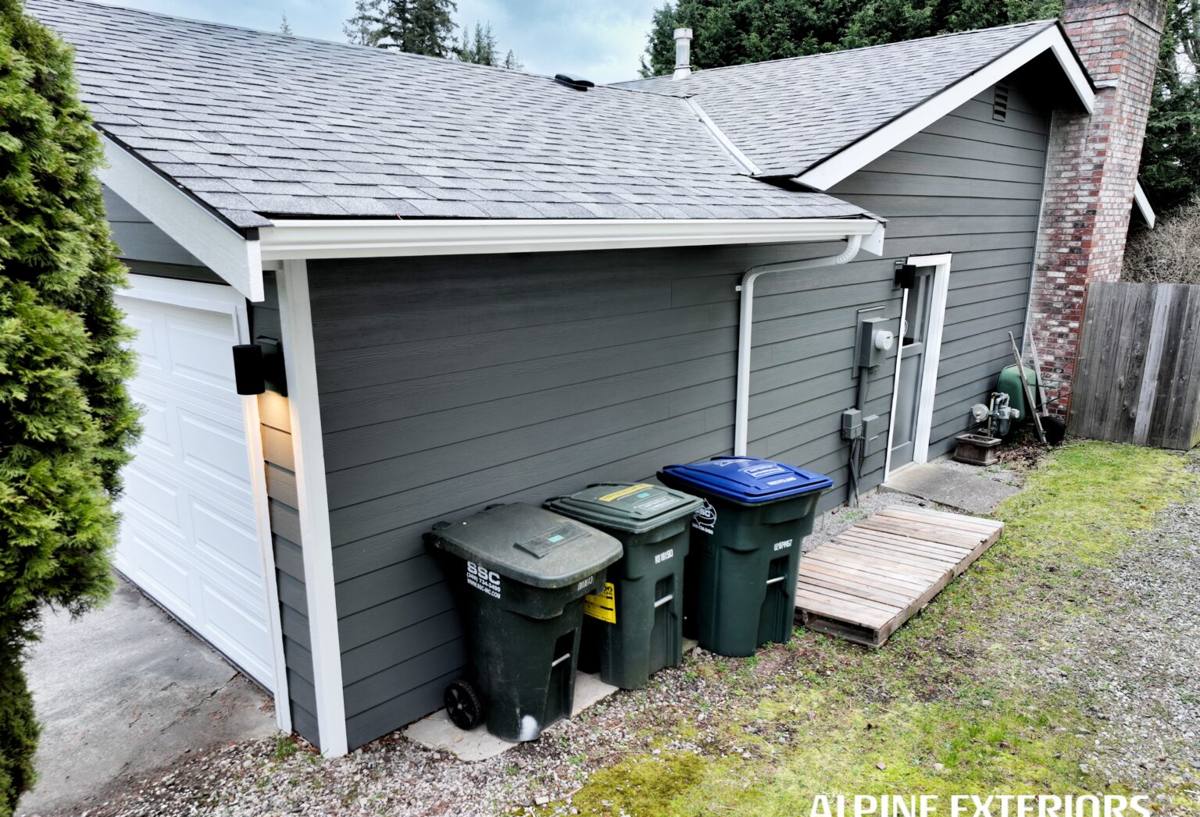
What Board & Batten Siding Actually Is
Board and batten is a two-layer application: wide flat panels (or boards) installed first, then narrower strips — the battens — fastened over the seams between them. The result is a rhythm of raised vertical lines and recessed panel faces that reads as more architectural and less "production home" than lap siding. It works especially well as an accent on gables, dormers, and porch elements, and as a full-wall treatment on homes going for a modern farmhouse or coastal cottage look.
The profile's real strength is also its risk. Every batten covers a seam, and every seam is a place water wants to get behind the cladding. Get the flashing, spacing, and fastening right, and board and batten performs beautifully for decades. Get it wrong, and you've built a network of hidden channels that funnel water straight into the wall assembly.
Where It Works Best on Island Homes
- Full-elevation siding on farmhouse, craftsman, and modern coastal builds
- Gable ends and dormers as a textural accent over lap siding
- Porch surrounds, shed additions, and detached structures like shops and studios
- Mixed-material facades pairing board and batten with stone, shake, or trim accents
Why Salt Air, Rain, and Moss Change the Installation Approach
A board and batten wall in a dry inland climate can tolerate more installation shortcuts than one built in San Juan County. Here, three conditions stack against a wall system at the same time, and each one attacks a different weak point.
Salt Air and Fastener Corrosion
Airborne salt accelerates corrosion on any exposed or marginal fastener. On a board and batten wall, battens are typically face-nailed or blind-nailed through both layers, which means there are more fastener penetrations per square foot than most other siding profiles. Using the wrong fastener spec, or skimping on corrosion-resistant nails, shows up as rust streaking and eventual fastener failure years before the siding itself would otherwise need attention.
Driving Rain and Seam Exposure
Wind-driven rain off the water doesn't just fall on a wall, it gets pushed sideways into it. Vertical battens create a lot of linear seam length compared to horizontal lap siding, and each seam needs proper gapping, back-priming, and flashing detail to keep wind-driven moisture from tracking behind the panel.
Moss and Prolonged Moisture Contact
Shaded, north-facing walls and anything near tree cover can stay damp for extended stretches during the islands' long wet season. Moss and organic growth on siding isn't just a cosmetic issue — sustained moisture contact at the base of boards, around window returns, and at grade-level trim is where lesser materials start to swell, delaminate, or rot from the inside out.
The James Hardie Board & Batten System We Install
We install James Hardie fiber cement exclusively, and board and batten is one of the applications where that decision matters most. We do not install LP SmartSide, vinyl, Cemplank, Allura, primed spruce, or cedar board and batten, and on a wall system with this many seams and fastener points, the reasons are practical, not brand loyalty.
Wood-based boards, even engineered ones, rely on a factory or field-applied coating to keep moisture out of the substrate. Once that coating is compromised at a cut edge, a nail hole, or a seam — which is inevitable over time in this climate — the underlying material is exposed to exactly the conditions Lopez Village throws at it most: standing moisture and organic growth. Fiber cement doesn't have that failure mode. It's non-combustible, dimensionally stable, and doesn't swell or rot when moisture reaches it.
For board and batten specifically, we typically use HardiePanel vertical siding as the base layer with HardieTrim boards installed as the battens, finished in a factory-applied ColorPlus finish. The ColorPlus system matters more here than on a lap profile — because board and batten has so much cut trim and so many exposed edges, a coating that's baked on and color-matched throughout the board resists chipping and fading far better than a field-applied paint job, especially on the sun and salt-exposed elevations facing open water.
What a Correct Installation Involves
Board and batten's appearance is simple. The install sequence that makes it perform for 30-plus years in a marine climate is not. This is the sequence we hold to on every job in the islands:
- Weather-resistive barrier installed and lapped correctly before any siding goes up, with all penetrations flashed
- Rainscreen or furring strategy considered on exposed elevations to let moisture that does get behind the cladding drain and dry
- Base panels installed with manufacturer-specified gapping at joints and corners to allow for expansion
- All cut edges back-primed or factory-sealed before installation, not after
- Battens fastened per Hardie's blind or face-nailing specification, with corrosion-resistant fasteners rated for coastal exposure
- Flashing and kickout details at every roof-wall intersection, window head, and horizontal trim transition
- Proper clearance maintained between the siding's bottom edge and grade, decks, and roof lines to keep splashback and standing moisture away from end grain
- Caulking used only where specified — sealant is not a substitute for correct flashing and is one of the most common places corner-cutting installers hide a bad detail
Any one of these steps skipped is invisible on installation day and expensive five to ten years later. That gap between "looks fine now" and "failing quietly" is exactly why the installer's judgment matters as much as the material.
Board & Batten vs Other Siding Profiles for Island Homes
| Factor | Board & Batten | Lap Siding | Shingle/Shake Style |
|---|---|---|---|
| Seam count per wall | Highest — vertical joints throughout | Lower, horizontal overlap sheds water naturally | Very high, but designed to overlap continuously |
| Salt air fastener exposure | High — battens add a second fastening layer | Moderate | High |
| Moss/growth visibility | Noticeable on flat panel faces between battens | Less noticeable, staggered shadow lines hide early growth | Can trap moisture in shingle gaps |
| Architectural fit for farmhouse/coastal styles | Excellent | Good, more traditional | Excellent for cottage/craftsman |
| Installer skill sensitivity | High — flashing and gapping detail-heavy | Moderate | High |
Our Process From Estimate to Finished Wall
Assessment and Measurement
We walk the property, note which elevations take the most wind-driven rain and which stay shaded and damp longest, and check existing trim, flashing, and moisture history before quoting anything.
Product and Detail Plan
We spec the HardiePanel and HardieTrim combination, color, and batten spacing, and map out flashing and rainscreen needs elevation by elevation rather than treating the whole house as one uniform assembly.
Installation
Crew follows the sequence above in order — barrier, flashing, base panels, battens, trim — with inspection points before each layer is covered by the next.
Final Walkthrough
We review clearances, caulk lines, and fastener pattern with the homeowner before calling the job finished, and explain what routine maintenance looks like going forward.
Why a Crew That Already Works Lopez Village Matters
Getting materials, crew, and equipment to island job sites means working around ferry schedules, which means a contractor who's already routed through the San Juan Islands regularly can plan a job efficiently instead of losing days to logistics. More importantly, a crew that has installed siding on multiple island properties has already seen which elevations in this specific climate take the worst of the wind-driven rain, where moss tends to establish first, and how salt exposure differs between a waterfront lot and one set back in tree cover. That local pattern recognition shows up in better flashing decisions and better material choices before the first panel goes up, not as an afterthought when a problem shows up later.
Maintenance in a Moss-Prone, Salt-Air Environment
A correctly installed James Hardie board and batten system is low-maintenance, not no-maintenance. In San Juan County's climate, a few habits go a long way:
- Rinse salt spray and airborne debris off exterior walls periodically, especially on elevations facing open water
- Keep gutters and downspouts clear so runoff doesn't sheet down the siding face
- Trim back vegetation and tree cover that keeps any wall shaded and damp longer than necessary
- Address moss or algae growth early with a gentle wash rather than letting it establish and hold moisture against the panel
- Have caulk lines and trim joints inspected every few years, since sealant is the one component that does wear over time even when everything behind it is sound
If you're weighing board and batten for a Lopez Village home or outbuilding, we're happy to walk the property, talk through which elevations need the most attention in this climate, and put together a straightforward, no-pressure estimate using the form below.