 Orcas Island Siding
 Roofing Built for Lopez Village's Marine Climate
Lopez Village sits close to the water, and that proximity shapes everything about how a roof ages here. Salt-laden air moves off Fisherman Bay and the surrounding shoreline and settles on every exposed surface, including your roof deck, flashing, and fasteners. Combine that with the driving rain that blows in sideways during winter storms and the long, wet moss season that runs from fall through spring, and you have a set of conditions that punishes a roof installed with mainland assumptions. A roof replacement here isn't just about swapping old shingles for new ones — it's about choosing materials and details that hold up to San Juan County's specific weather pattern year after year.
We've worked on homes throughout Orcas Island and the wider county, and Lopez Village has its own personality: older homes with original roof decking that needs a close look, newer builds where a previous contractor cut corners on ventilation, and everything in between. This page is about what a correct roof replacement looks like for this specific community, not a generic checklist.
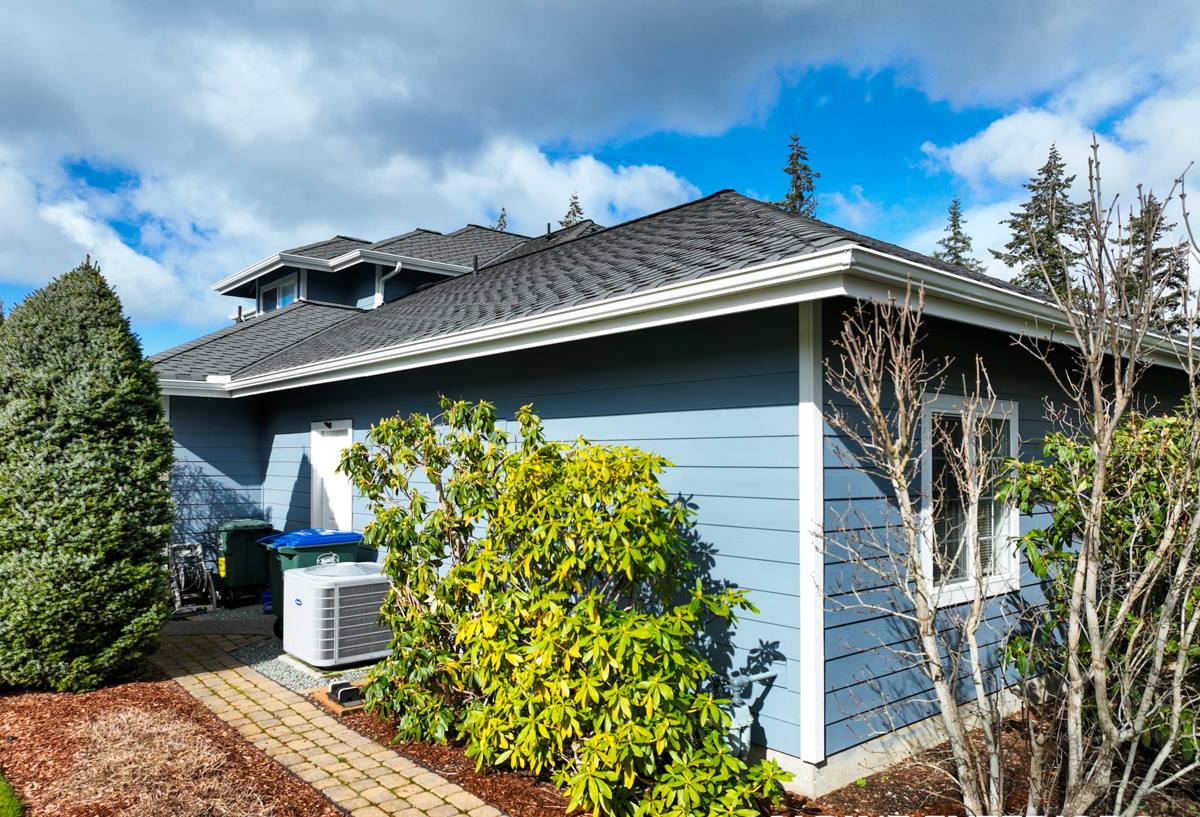
Why Salt Air and Moss Change the Job
Corrosion Is the Quiet Killer
Standard steel fasteners and untreated flashing corrode faster near saltwater. That corrosion is often invisible from the ground until a fastener backs out or a flashing seam starts leaking. We use corrosion-resistant fasteners and flashing rated for coastal exposure on every roof we replace in this area — it costs a little more upfront and saves a callback five years down the road.
Moss Isn't Just Cosmetic
Moss holds moisture against the roofing material and works its way under shingle tabs and shake edges over time, particularly on north-facing slopes and anywhere shade lingers into midday. A roof that isn't detailed to shed water quickly gives moss a foothold within a couple of seasons. Proper underlayment, correct shingle exposure, and attention to slopes that stay damp longest all reduce how aggressively moss establishes itself.
Driving Rain Finds Weak Details
Wind-driven rain doesn't just fall straight down — it pushes up under laps and around penetrations. Valleys, chimney flashing, skylight curbs, and roof-to-wall transitions are where a roof replacement either holds or fails during a real winter storm. These details take longer to do right, and they're where we spend the extra time.
What a Correct Roof Replacement Involves
A roof replacement is more than the visible layer. Here's the sequence we follow on Lopez Village homes:
- Full tear-off of old roofing material down to the deck — no roofing over existing layers
- Deck inspection for rot, delamination, or soft spots, especially around vents, skylights, and eaves where moisture tends to collect
- Repair or replacement of any compromised sheathing before anything new goes down
- Installation of a synthetic or self-adhered underlayment appropriate for the roof's slope and exposure
- Ice-and-water shield or equivalent membrane at eaves, valleys, and penetrations where wind-driven rain is most likely to intrude
- Corrosion-resistant flashing at all walls, chimneys, skylights, and valleys
- Proper ventilation review — intake and exhaust balance matters as much as the roofing material itself
- Installation of the finish roofing material per manufacturer specifications, not shortcuts
- Final walk-through covering what was done, what to watch for, and how to maintain the new roof
Choosing the Right Roofing Material for This Climate
There isn't one "best" roofing material for every home — it depends on the home's style, roof pitch, budget, and how much maintenance the owner wants to take on. Here's an honest look at the common options for a marine, moss-prone climate like Lopez Village's:
| Material | Moss & Moisture Resistance | Salt Air Durability | Maintenance |
|---|---|---|---|
| Architectural asphalt shingle | Good with proper underlayment and slope detailing | Good — use corrosion-resistant fasteners and flashing | Periodic moss treatment and gutter cleaning |
| Standing seam metal | Excellent — sheds water and discourages moss growth | Very good with marine-grade coatings and fasteners | Low — occasional inspection of seams and fasteners |
| Cedar shake | Requires diligent maintenance to resist moss and rot in this climate | Moderate — natural material weathers with salt exposure | Higher — regular treatment, cleaning, and inspection |
| Synthetic composite shingle/shake | Good — resists moisture absorption better than natural wood | Good with correct fastener and flashing choices | Low to moderate |
We don't push one product on every homeowner. What we do is walk through the trade-offs honestly — upfront cost, expected lifespan in this specific climate, appearance goals, and how much upkeep you're willing to do — and help you land on the material that fits your home and your priorities.
A Note on Ventilation
Ventilation gets overlooked constantly, and it matters as much here as anywhere. A roof deck that can't breathe traps moisture from inside the home, which accelerates rot from underneath — separate from anything happening on the exterior surface. On a replacement, we always evaluate the existing intake and exhaust venting and correct imbalances rather than reinstalling a system that was already undersized.
Our Process for Lopez Village Roof Replacements
1. On-Site Assessment
We inspect the existing roof, the attic or roof cavity where accessible, and the home's exposure to wind and moisture. This tells us what we're actually dealing with rather than guessing from a photo or a phone call.
2. Straightforward Estimate
You get a written estimate that spells out the material, the scope of tear-off and deck repair (if needed), and the timeline. No vague allowances that turn into surprise change orders later.
3. Scheduling Around Weather
San Juan County weather windows matter for roofing. We plan replacement projects around forecasted dry stretches and keep the roof deck protected if conditions shift mid-project. Rushing a roof onto a wet deck is how problems start.
4. The Replacement Itself
Full tear-off, deck repair as needed, underlayment, flashing, and finish material — done in the sequence outlined above, with each step inspected before the next begins.
5. Cleanup and Walk-Through
Job-site cleanup including magnetic sweep for stray fasteners, followed by a walk-through so you understand what was installed and any maintenance recommendations specific to your roof.
Signs a Lopez Village Roof Needs Replacement, Not Repair
Not every roofing issue calls for full replacement. Here's how we help you tell the difference:
- Granule loss across large sections of the roof, not just isolated spots
- Multiple layers of aging roofing material already on the deck from prior work
- Widespread moss growth that's been established for more than one season
- Soft spots or visible sagging when walking the roof or viewing from the attic
- Repeated leaks in different locations rather than one isolated failure point
- Roofing material at or past its expected service life for its type
- Visible fastener corrosion or flashing deterioration in multiple areas
If your roof shows one or two of these signs isolated to a small area, a repair may genuinely be the more sensible move, and we'll tell you that. Replacement makes sense when the issues are widespread or when the underlying deck and structure are already compromised.
Cost Factors for a Lopez Village Roof Replacement
Every roof is different, so we don't quote prices sight unseen — but these are the factors that most affect what a replacement costs on a Lopez Village home:
| Factor | Why It Matters |
|---|---|
| Roof size and pitch | Steeper roofs take longer and require more safety setup |
| Deck condition | Rotted or delaminated sheathing adds repair scope before new roofing goes on |
| Material choice | Asphalt, metal, and shake carry different material and labor costs |
| Number of penetrations | Chimneys, skylights, and vents each add flashing detail and labor time |
| Access and staging | Ferry logistics and site access on the island can affect scheduling and material delivery |
| Existing layers | Removing multiple old roofing layers adds tear-off time and disposal cost |
Why Hiring a Crew That Already Works This Area Matters
Roofing on Lopez Village and the surrounding San Juan County islands comes with logistics that mainland contractors often underestimate — ferry scheduling for material delivery, weather windows that close faster than on the mainland, and a building climate that's genuinely different from a typical Pacific Northwest inland job. A crew that already works this region has that logistics figured out, understands how the local marine environment ages roofing materials, and isn't learning those lessons on your home.
We also know what's already out there on Lopez Village roofs — the shortcuts that show up on older installs, the ventilation mistakes that repeat from house to house, and the flashing details that hold up versus the ones that don't. That local track record shapes how we approach every replacement, not just in material choice but in the small installation details that determine whether a roof performs for its full expected lifespan or starts leaking in year eight.
Maintaining Your New Roof
A well-installed roof still benefits from basic upkeep in this climate:
- Clear debris and moss buildup from valleys and north-facing slopes at least once a year
- Keep gutters clear so water isn't backing up under roof edges
- Trim back overhanging branches that keep sections of roof shaded and damp
- Have flashing and penetration points visually checked periodically, especially after major storms
- Address small leaks or missing shingles promptly rather than waiting for them to spread
None of this is complicated, but skipping it is how a roof that should last decades starts showing problems early — especially in a climate this demanding.
If you're weighing a roof replacement on a Lopez Village home, we're happy to take a look and give you a straightforward assessment — no pressure, no inflated urgency. Request a free estimate using the form below and we'll go from there.