 Orcas Island Siding
 Roof Repair Built for Friday Harbor's Marine Climate
Friday Harbor sits in one of the more demanding roofing environments in the Pacific Northwest. Homes here deal with salt-laden air off the water, long stretches of driving rain in the fall and winter, and a moss season that can run nearly year-round under the tree cover common to San Juan County properties. None of that is unusual for the island — but it does mean roof repair work here needs to account for conditions that a mainland crew unfamiliar with the area might miss entirely.
This page covers roof repair specifically for Friday Harbor homes: what typically goes wrong, what a correct repair actually involves, and how we approach the work when we're called out to a property in this part of San Juan County.
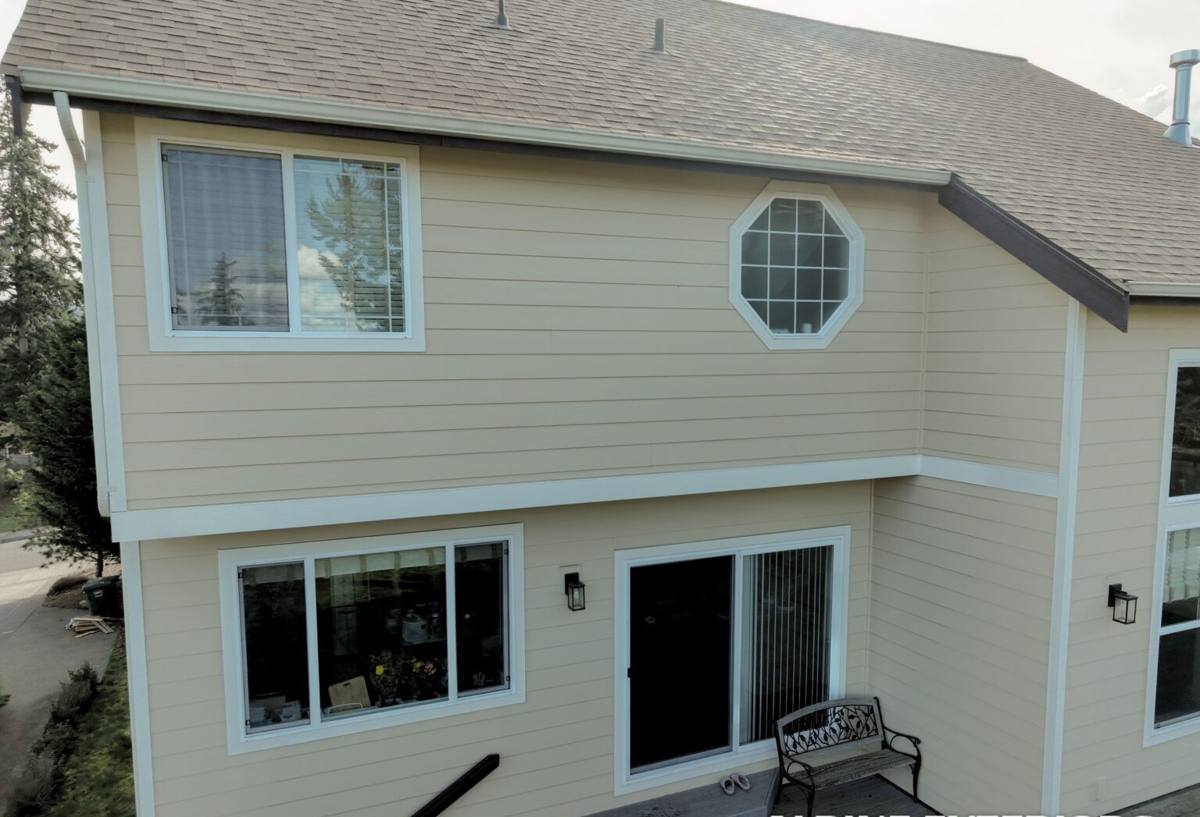
Why Island Roofs Wear Differently
Salt air is corrosive to exposed metal — flashing, fasteners, gutter hardware, and any mechanical roof penetrations take the brunt of it over time. Combine that with near-constant moisture from rain and fog, and you get conditions that accelerate two things: metal corrosion and organic growth. Moss, lichen, and algae thrive in the damp, shaded conditions typical of wooded island lots, and once established, they hold moisture against the roofing material far longer than an open, sun-exposed roof would ever experience.
The practical result is that roofs in and around Friday Harbor often show localized damage — a section under a tree canopy failing well before the rest of the roof, or flashing around a chimney corroding faster than the field shingles nearby. Repair work here is rarely a uniform, whole-roof problem. It's usually concentrated in the spots where moisture and shade overlap.
Moss Is a Symptom, Not Just a Nuisance
Moss doesn't just look bad — it lifts shingle edges, traps water against the roof deck, and creates a growing medium that holds moisture through dry spells that would otherwise let a roof recover. By the time moss is visible from the ground, it's often been established long enough to have already caused granule loss or minor lifting underneath. Any honest roof repair inspection on an island property has to check under moss growth, not just around it.
Common Roof Repair Calls We See in This Area
Most of the repair work we do in Friday Harbor falls into a handful of categories:
- Storm-driven leaks — wind-driven rain finding its way in around flashing, vents, or ridge caps after a strong system moves through
- Moss and organic buildup — shingle damage and moisture retention from moss, lichen, or algae, especially on shaded or north-facing slopes
- Flashing failure — corroded or separated flashing at chimneys, skylights, valleys, and wall-to-roof transitions
- Fastener corrosion — nails or screws that have rusted and backed out, especially on older roofs installed with standard (non-marine-rated) hardware
- Gutter and edge damage — clogged or failing gutters that back water up under the roof edge during heavy rain
- Wind and debris damage — lifted, cracked, or missing shingles or panels from storm events
Isolated leaks are the most common call, and they're also the ones most likely to get made worse by a rushed or partial fix. A patch that stops water from showing up inside the house isn't the same as a repair that actually addresses the underlying failure.
What a Correct Roof Repair Actually Involves
A proper repair starts with finding the real source of the problem, not just the spot where water is showing up indoors. Water travels — it can enter at a flashing seam several feet from where a ceiling stain appears. That means every repair call starts with an inspection of the roof itself, not just a patch job based on where the interior damage is visible.
From there, a correct repair generally includes:
- Identifying the actual entry point, not just the visible symptom
- Removing and replacing damaged roofing material back to sound decking
- Checking the roof deck underneath for rot or soft spots before closing the repair back up
- Replacing flashing rather than sealing over corroded or failed flashing with caulk
- Matching materials as closely as possible so the repair holds up and doesn't stand out
- Confirming proper drainage and ventilation aren't contributing to the original failure
Sealant-only fixes are common in this trade because they're fast and cheap in the moment. They also tend to fail again within a season or two, especially in a climate like this one where the sealant is exposed to constant moisture cycling. We treat sealant as a component of a repair, not the repair itself.
Our Process From Call to Completion
1. Inspection
We start with a full roof inspection, not just a look at the reported leak area. On a wooded or shaded property, that includes checking for moss and moisture retention in areas that may not be causing problems yet but are heading that way.
2. Diagnosis and Explanation
Before any work begins, we explain what we found, what's causing it, and what the repair will involve. If a repair isn't going to hold — because the surrounding material is too degraded, for example — we'll say so rather than patching something that's likely to fail again soon.
3. Repair Work
We remove damaged material back to sound decking, address the actual cause (not just the symptom), and rebuild the affected section with materials matched to your existing roof as closely as possible.
4. Final Check
Once the repair is complete, we check drainage, flashing seams, and surrounding material to make sure the fix holds up under real weather, not just a garden hose test.
Repair vs. Replacement: How We Help You Decide
Not every roof problem needs a full replacement, and not every leak can be permanently solved with a patch. The right call usually comes down to the age and condition of the roof, how widespread the damage is, and whether the underlying deck is still sound.
| Factor | Favors Repair | Favors Replacement |
|---|---|---|
| Roof age | Under 15-20 years, depending on material | Near or past typical material lifespan |
| Damage extent | Localized to one section or penetration | Spread across multiple slopes or the whole roof |
| Deck condition | Solid, no rot found during inspection | Soft spots or rot found in multiple areas |
| Repair history | First or second repair in this area | Same area has been repaired multiple times before |
| Moss/organic damage | Surface-level, caught early | Long-term buildup with granule loss or lifting |
We'll always recommend the repair when it's the honest answer to the problem in front of us. We'll also tell you plainly when a repair is a short-term fix on a roof that's better served by replacement, so you can plan around it rather than get surprised by another call next winter.
Materials and Why They Hold Up Differently Here
Material choice matters more in a salt-air, high-moisture environment than it does further inland. Fastener quality, flashing metal, and underlayment all play a bigger role in how long a repair lasts on an island roof.
- Fasteners: We use corrosion-resistant fasteners appropriate for coastal exposure rather than standard hardware, which corrodes noticeably faster this close to salt water.
- Flashing: Flashing material and installation detail matter more here than almost anywhere else on the roof — it's the first thing to fail under sustained moisture and wind-driven rain.
- Underlayment: A quality underlayment gives a roof a second line of defense when wind-driven rain gets past the primary roofing material, which happens more often in exposed island locations.
- Shingle and panel matching: We try to match existing material as closely as possible on a repair, both for appearance and so the repaired section weathers at a similar rate to the rest of the roof.
A Note on Product Choices
We don't push a single "best" material for every roof. The right choice depends on the roof's slope, exposure, existing material, and your budget. What we won't do is use fasteners or flashing that are cheaper but poorly suited to salt air exposure just to save time on a repair — that trade-off tends to show up again as a callback within a year or two, and we'd rather do it right the first time.
Maintenance Checklist for San Juan County Homeowners
A few habits go a long way toward catching problems before they become repair calls:
- Check for moss buildup at least twice a year, especially on shaded or north-facing sections
- Clear gutters and downspouts before the fall rain season starts
- Trim back overhanging branches that keep sections of the roof shaded and damp
- Look for granule buildup in gutters, which can signal shingle wear
- Have flashing around chimneys, skylights, and vents checked periodically — these fail before field material usually does
- Address small leaks early; a minor drip caught in year one is a much smaller job than the same leak after two winters of deck rot
Why a Local Crew Matters for This Kind of Work
Roof repair on an island property comes with logistics that don't apply to mainland jobs — ferry scheduling, weather windows that can close quickly, and material lead times that are longer when supplies have to come over by boat. A crew that already works Friday Harbor and the surrounding San Juan Islands regularly plans around those realities instead of getting caught off guard by them.
Familiarity with the local climate also matters in the diagnosis itself. Knowing that a north-facing, tree-shaded roof in this area is going to show moss-related wear years before a similarly aged roof in full sun changes how we inspect and what we look for. That's the kind of judgment that comes from working on island roofs consistently, not from a one-off visit.
If you're dealing with a leak, storm damage, or a roof that's showing its age around Friday Harbor, we're glad to take a look and give you a straight answer about what it needs. Reach out for a free, no-pressure estimate using the form below.