 Orcas Island Siding
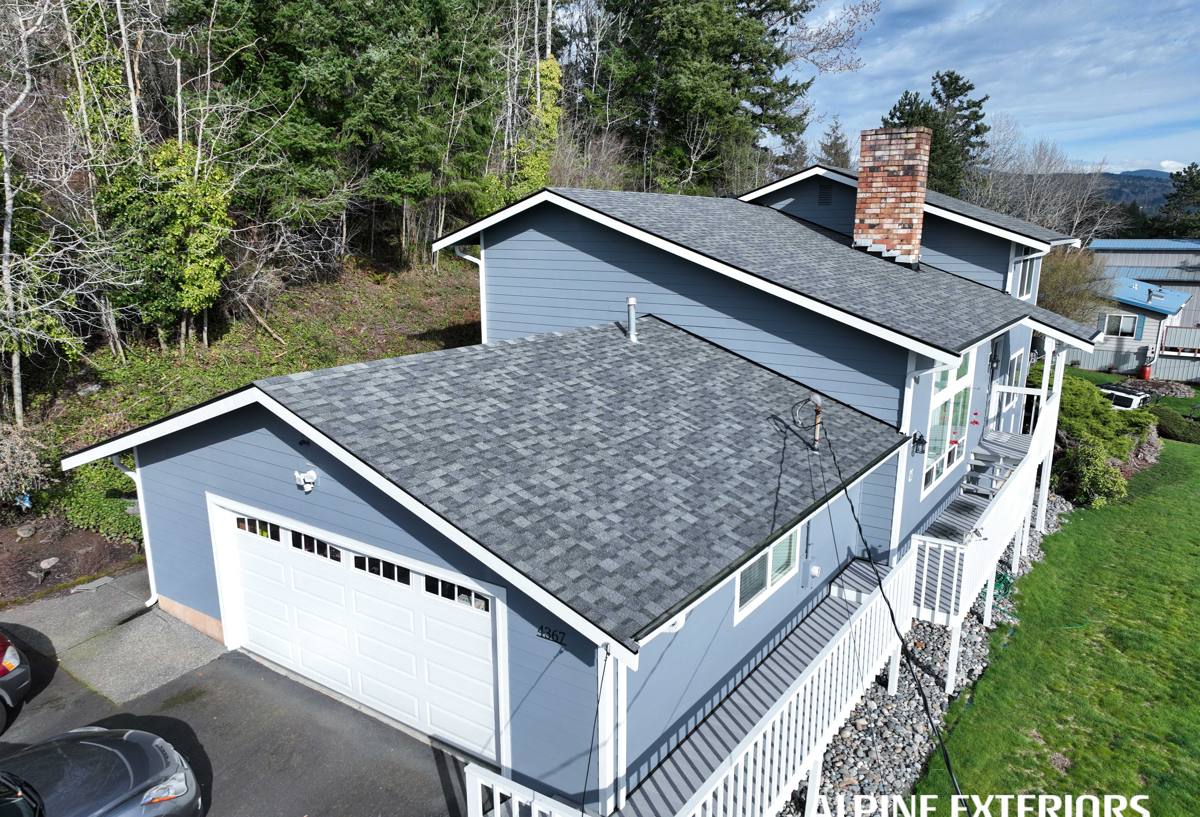
 Asphalt Shingle Roofing Built for the Cascade Lake Area
Homes around Cascade Lake sit under heavier tree cover than most of Orcas Island, and that changes how a roof ages. Between the shade from surrounding conifers, the lake's moisture, and the salt-laden marine air that moves across the whole island, a shingle roof here works harder than the same roof would on a dry, open lot on the mainland. We install and repair asphalt shingle roofing specifically with that environment in mind, not a generic installation pulled from a manual written for a different climate.
This page covers what asphalt shingle roofing actually needs to hold up in the Cascade Lake area, what a correct installation looks like, and how our process works from first look to final walk-through.
Why This Microclimate Is Harder on a Roof
Shade and Moss
Tree-shaded roofs near Cascade Lake stay damp longer after rain than roofs in open, sun-exposed areas. That extended dampness is exactly what moss and algae need to establish themselves on shingle surfaces. Once moss takes hold, it lifts shingle tabs, holds water against the roof deck, and accelerates granule loss — the granules are what protect the shingle's asphalt layer from UV and weather in the first place.
Driving Rain
San Juan County gets a lot of its precipitation as wind-driven rain rather than straight-down rainfall, especially during fall and winter storm systems. Wind-driven rain can push moisture up and under shingle edges, into ridge and valley details, and around any penetration (vents, chimneys, skylights) that wasn't flashed correctly. A roof that would shed water fine in a calm rain can still leak under sideways-blown rain if the underlayment and flashing details were done to a lower standard.
Salt Air
Even set back from the shoreline, Orcas Island roofs are exposed to salt-laden air carried in off the water. Salt exposure speeds up corrosion on exposed metal — nails, flashing, vent stacks, and drip edge — which is why fastener and flashing material choice matters more here than in an inland climate.
What a Correct Asphalt Shingle Installation Includes
A shingle roof is a system, not just the visible shingle layer. Each component below plays a specific role, and skipping or downgrading any one of them is where most premature roof failures start.
- Deck inspection and repair: Any soft, delaminated, or moisture-damaged sheathing gets replaced before new shingles go down — covering a bad deck just hides the problem.
- Ice-and-water shield at vulnerable points: Eaves, valleys, and roof-to-wall transitions get a self-adhering waterproof membrane, not just standard underlayment, because these are the spots wind-driven rain finds first.
- Synthetic underlayment across the field: A durable synthetic underlayment adds a secondary water barrier under the shingles and holds up better than old-style felt in a persistently damp environment.
- Corrosion-resistant flashing and fasteners: Given the salt air, we use flashing and fastener materials chosen to resist corrosion rather than the cheapest option that meets minimum code.
- Proper nailing pattern: Correct nail count and placement (per manufacturer spec, not a shortcut pattern) is what keeps shingles from lifting in island wind gusts.
- Balanced attic ventilation: Intake and exhaust ventilation keep the underside of the deck dry and regulate temperature, which reduces condensation and helps shingles last their full rated life.
- Ridge, hip, and valley detailing: These transition points take the most water flow and wind stress on the whole roof, and they're where inexperienced installations fail first.
Choosing a Shingle Line for This Climate
Not every asphalt shingle product is a good fit for a shaded, damp, salt-exposed roof. We steer homeowners toward algae-resistant shingle lines — these use copper-containing granules blended into the shingle surface specifically to slow moss and algae growth, which matters more at Cascade Lake than almost anywhere else on the island given the tree cover. We also weigh wind rating, since gusts off the water and through the trees can be unpredictable, and impact rating in areas with more falling debris from overhead branches.
| Factor | Why It Matters Here |
|---|---|
| Algae-resistant granules | Slows moss and algae growth under persistent shade near the lake |
| Wind rating | Handles gusts funneled through tree cover and open water exposure |
| Warranty structure | Confirms what's covered for materials versus workmanship, and for how long |
| Color and reflectivity | Lighter colors shed heat better; darker colors can hide early moss staining longer |
| Local manufacturer support | Determines how straightforward a warranty claim is if an issue shows up years out |
Repair, Recover, or Full Replacement?
Not every shingle roof at Cascade Lake needs a full tear-off. We evaluate three options honestly rather than defaulting to the most expensive one.
Repair
Localized damage — a section of lifted or missing shingles, a failed flashing detail, an isolated leak — can often be repaired without touching the rest of the roof, as long as the surrounding shingles are still in good condition and a matching product is available.
Recover
In limited cases, a new shingle layer can go over sound existing shingles. We're conservative about recommending this at Cascade Lake specifically, because a recover doesn't let us inspect or repair the deck underneath, and deck moisture is a real risk in a shaded, damp setting. If we can't confirm the deck is dry and sound, we won't recommend a recover.
Full Replacement
When the shingles are past their service life, the deck needs repair, or moss and moisture damage have gone on long enough to compromise multiple layers of the roof system, full replacement is the honest answer. It costs more upfront but resets the clock on the whole system rather than patching around problems that will keep resurfacing.
Our Process
- On-site assessment: We walk the roof (or inspect from a lift if pitch or access requires it), check the attic for ventilation and moisture signs, and document existing damage.
- Honest scope and estimate: You get a written estimate that separates repair, recover, and replacement options where more than one is realistic, with no pressure toward the most expensive choice.
- Material selection: We walk through shingle line options suited to shaded, damp, salt-exposed conditions and let you weigh appearance, cost, and warranty.
- Scheduling around weather: Shingle installation needs a dry window, so we plan around San Juan County's forecast rather than pushing work into marginal conditions that compromise the seal.
- Installation: Deck repair, underlayment, flashing, shingles, and ventilation work done to full manufacturer spec, not a stripped-down version of it.
- Final walk-through: We review the completed roof with you, cover warranty paperwork, and explain any maintenance that will help the roof perform in this specific setting.
Maintenance That Actually Matters Here
A shingle roof at Cascade Lake needs a bit more attention than one in a dry, open location, but the maintenance itself is simple and inexpensive compared to the cost of ignoring it.
- Keep gutters and valleys clear of needles and leaf litter, which trap moisture against the roof surface
- Trim overhanging branches back so shingles get more sun exposure and less direct debris contact
- Address moss at the first sign of it rather than waiting until it's visibly thick
- Have flashing and fasteners checked periodically for early corrosion, especially at chimneys and vents
- Schedule a roof inspection after major windstorms, since lifted or displaced shingles aren't always visible from the ground
Why a Crew That Already Works Cascade Lake Matters
Roofing crews who don't regularly work in shaded, damp, salt-exposed island conditions tend to default to standard-climate assumptions — standard underlayment, standard flashing materials, standard ventilation ratios. Those defaults aren't wrong everywhere, but they leave a roof under-protected in a spot like Cascade Lake. A crew that already works this specific area brings judgment calls that come from seeing how roofs actually age here: where moss tends to start, which valleys take the worst of the driving rain, and which fastener and flashing choices hold up against the salt air over the long run. That local pattern recognition is the difference between a roof that looks right on install day and one that's still performing correctly a decade later.
Access and logistics matter too. Working on Orcas Island means factoring in ferry schedules, material delivery timing, and weather windows that a mainland-based crew may not plan around carefully, which can turn a straightforward project into a drawn-out one.
Get an Honest Look at Your Roof
If you're dealing with moss buildup, a suspected leak, or just want an honest read on how much life is left in your current shingle roof, we're glad to take a look. Request a free, no-pressure estimate using the form below and we'll walk you through what we find and what your realistic options are.